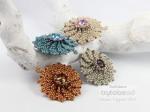
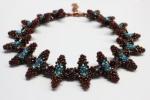
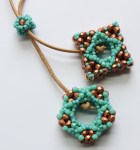
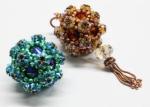
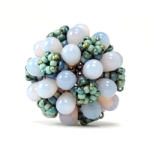
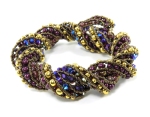
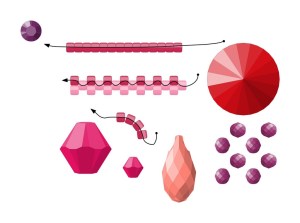
Materials packs for my Baroque Tape Measure

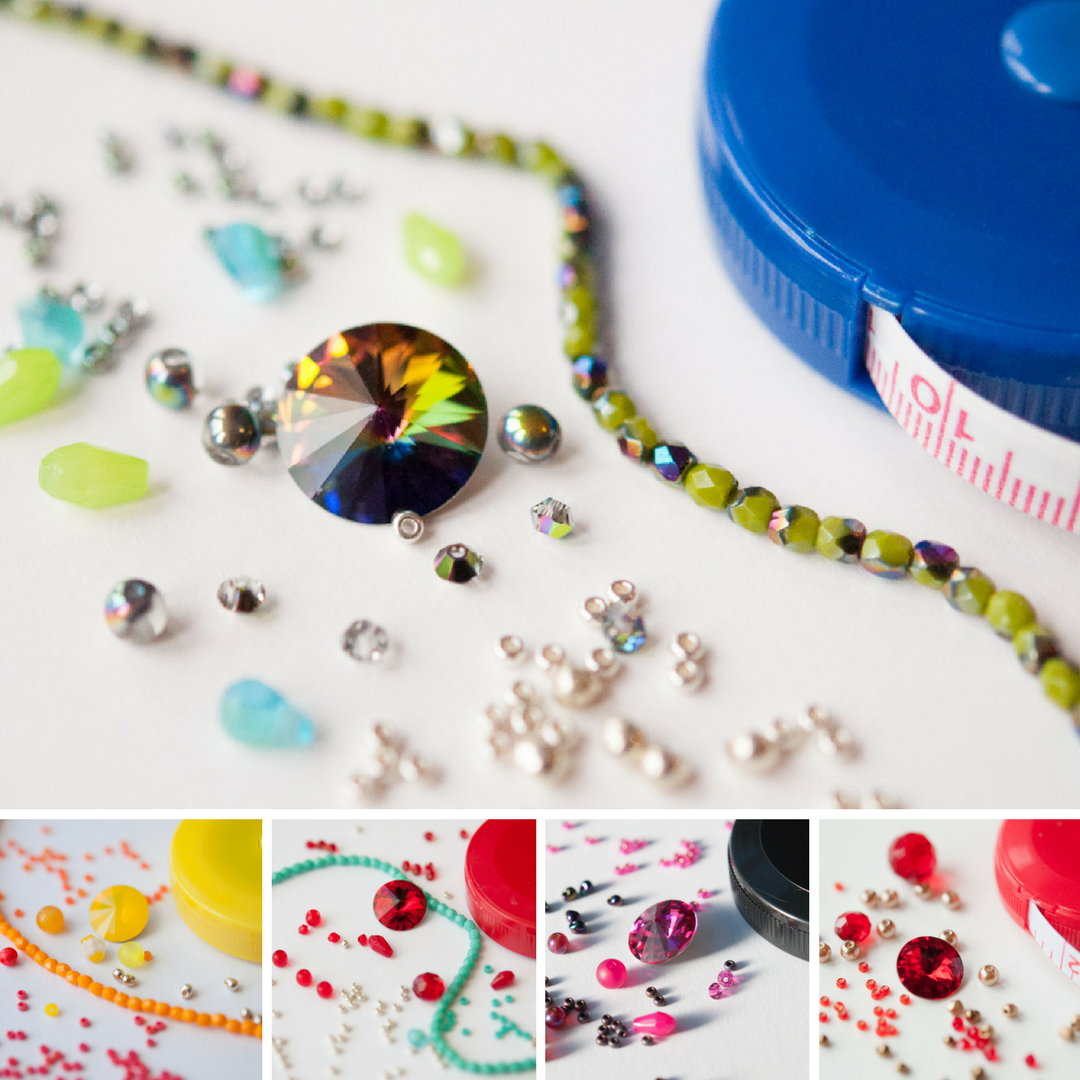
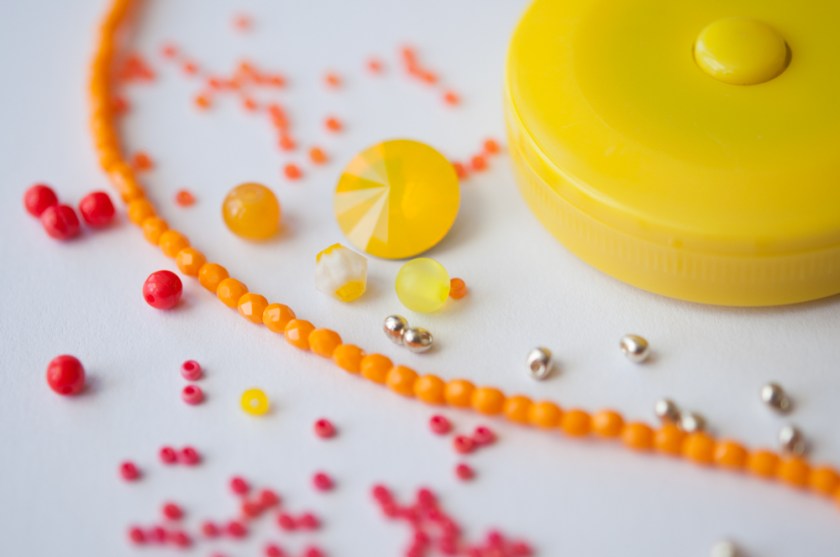
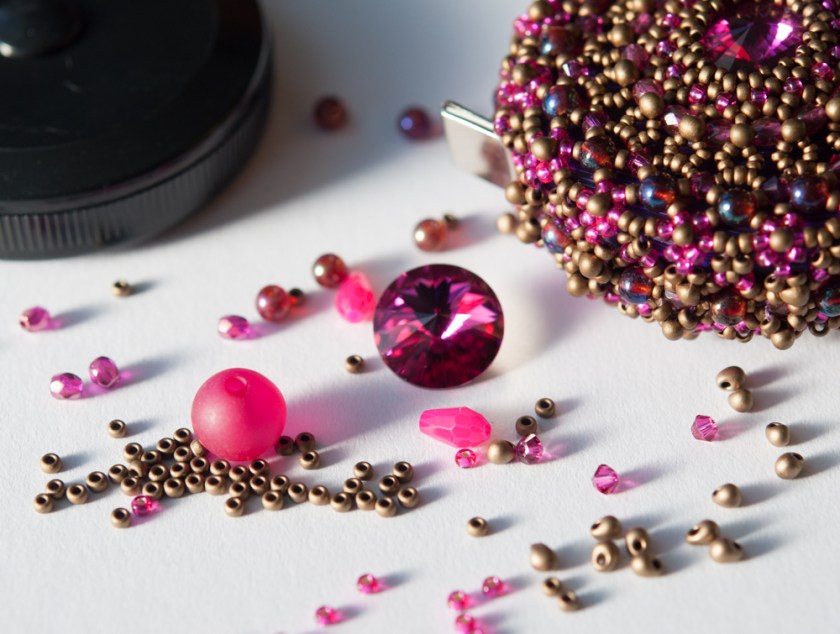
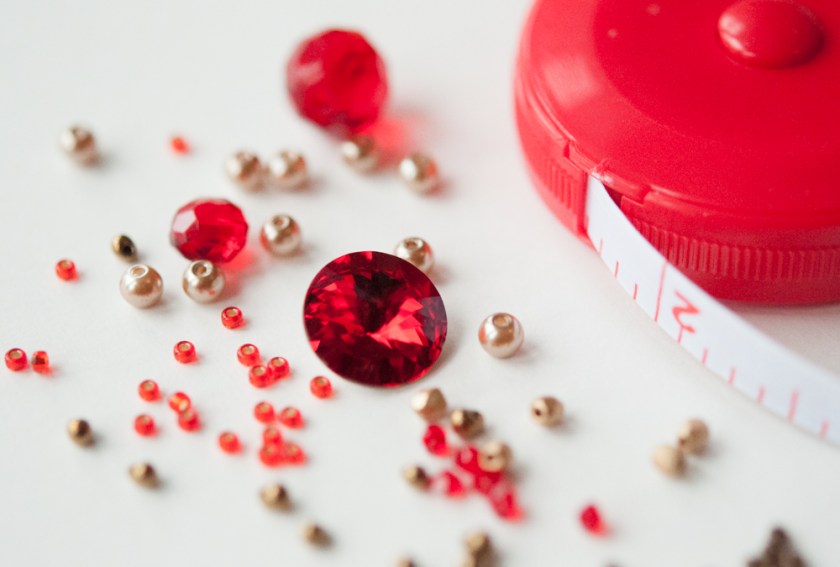
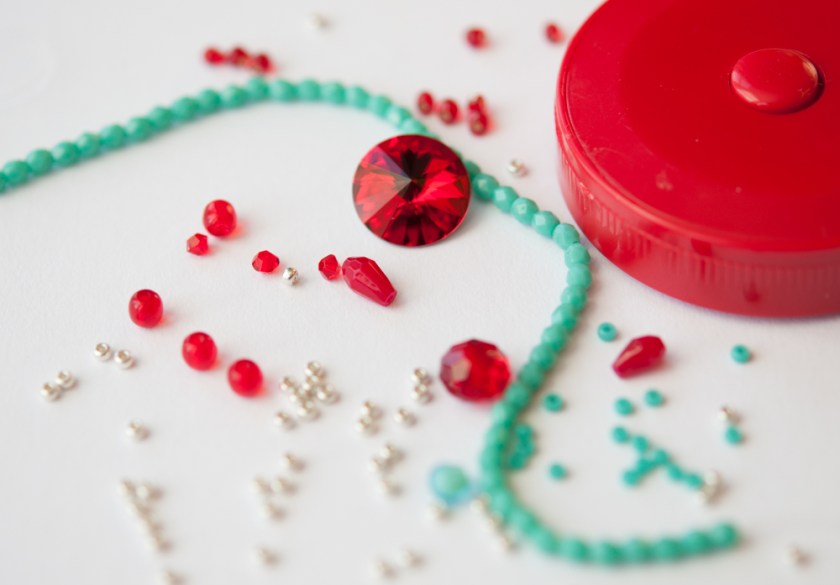
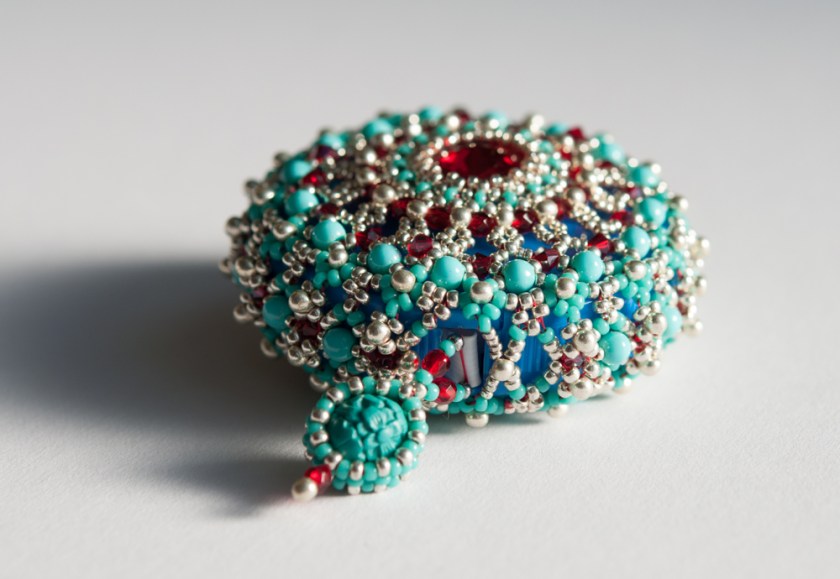
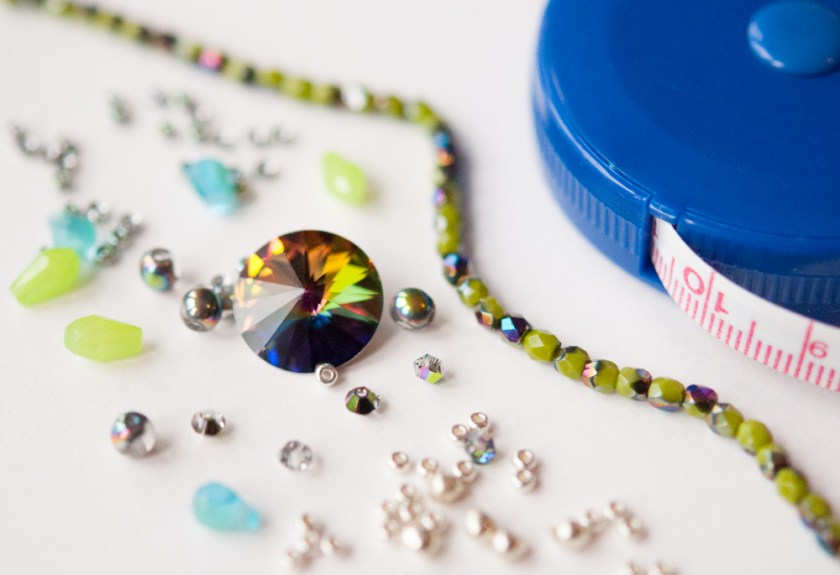
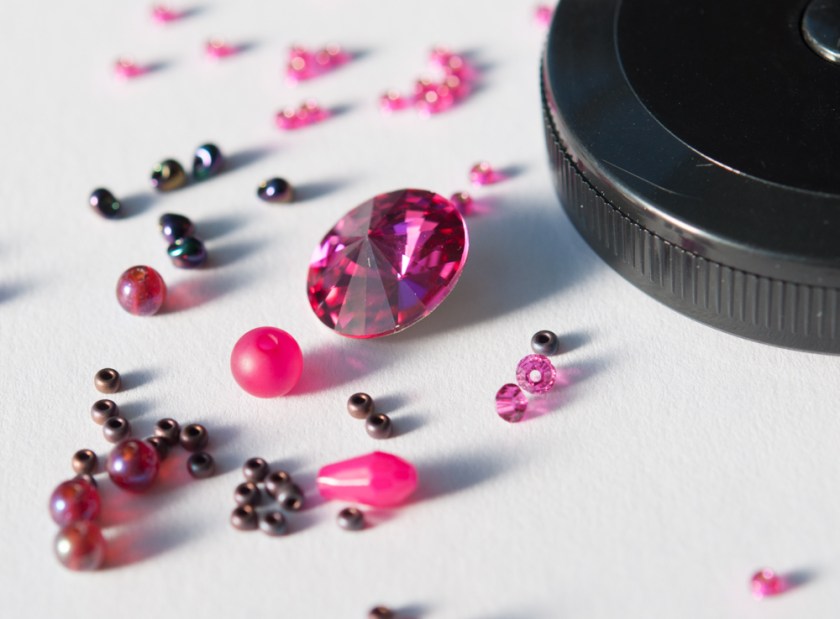
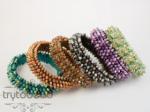
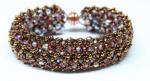
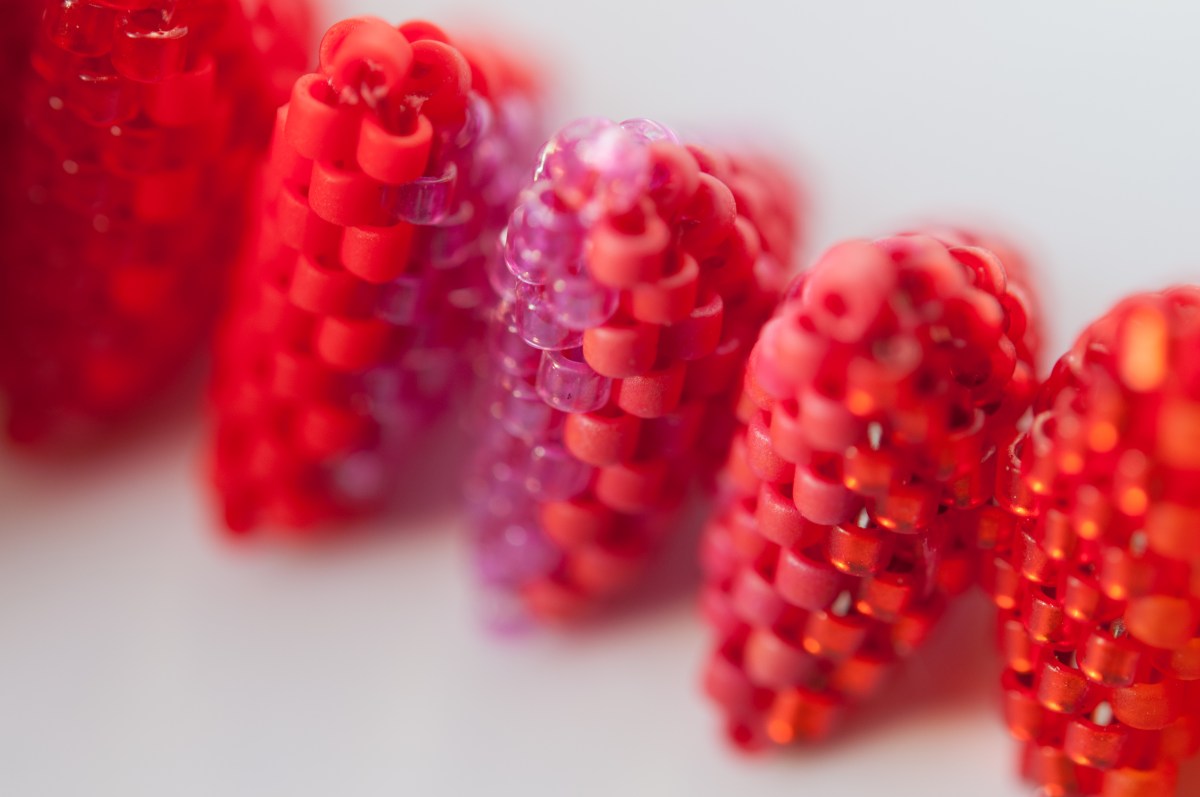
Just to let you all know that I’ve just sold the last of the current set of Baroque Tape Measure materials packs – the plan from now on is to run a restricted set of colourways in bigger quantities, rather than the one offs and very limited runs. That should help me keep a nice ranges of choices available at all times. The beads are all due with me any day, so hopefully by next weekend (25th/26th) I will have the following colourways listed:

Red and old gold
Turquoise, scarlet and silver
Tequila sunrise (yellow, salmon, orange)
Vitrail and silver
And if I can get the right tapes, the original Bronze & Fuchsia.

They’re all based on colourways I’ve offered previously, so have a look at the Materials Packs page here to see if you might like to wait, or even ask me to hold one for you. And if you have any requests for future colours, just yell!

Diva – more adventures with bead embroidery

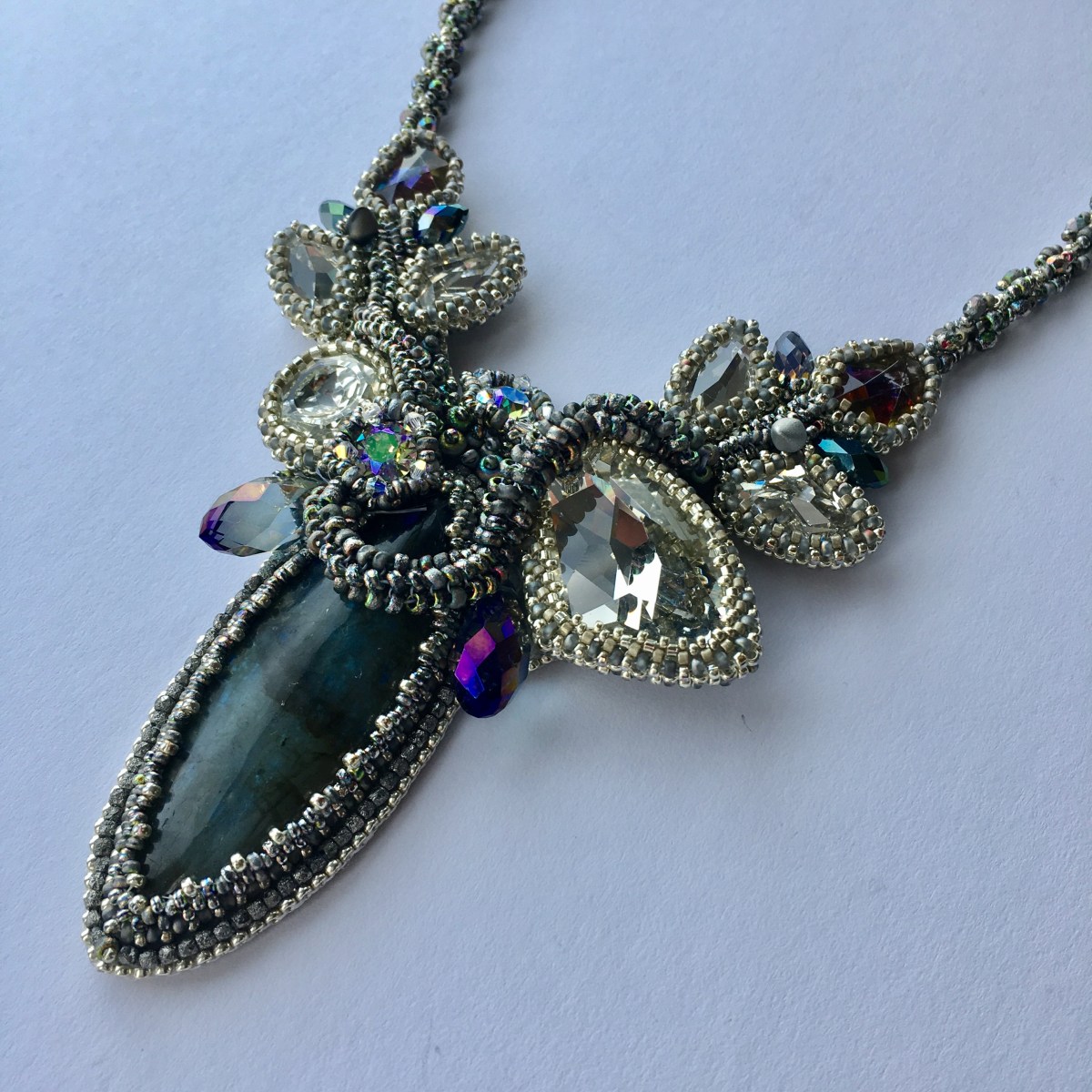
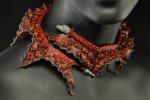
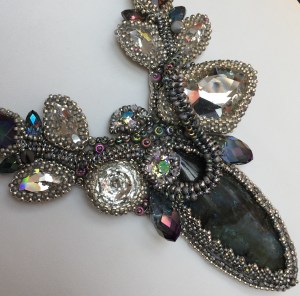
Apologies (yet again) for the quietness here and in my shops.  I’m working on two separate competition pieces at the moment, which means I can’t really post about them, but in between doing and re-doing them, I’ve finished another piece which this post is all about.  It’s a necklace I made for a concert – as a soloist I had an opportunity to make something with all of the enormous crystals I’ve been hoarding and dress up the plain black velvet dress the piece (Faure’s beautiful Requiem) required.  The concert went really well, and the necklace gave me an extra confidence boost.  Sadly I forgot to take pictures on the night but I have been taking them as I made it, so I thought it would be interesting to describe that process.

So – how did it come about?  I’d bezelled several modern and vintage crystals from my stash already using my usual MRAW into Peyote bezel, as I’d intended to use them for another piece, but it didn’t work out so they were sat in my workbag.  When the solo came up it seemed like the perfect chance to use them, so they were my starting point and set the initial colour scheme of silver, light matte pewter and etched vitrail with plain crystals.

Grouped together the bezelled crystals didn’t seem big enough to occupy the very deep V shaped neckline of the wrap style dress, so I had a root around and found a huge labradorite cabochon.  I mounted that on some grey Nicole’s Bead Backing, and cut a rough shape, adding wings at the top to join to the crystals. I bezelled using back stitch and then peyote, alternating bead and no bead on the final row for textural interest.  A back stitched row of tiny 2mm etched granite fire polished beads finished that part.
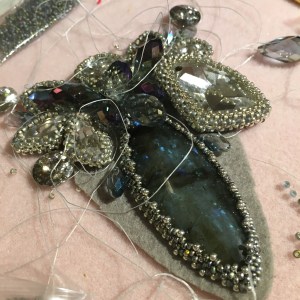
Next I had to decide how to put the piece together.  Because I was making for one very specific occasion, and one dress I wanted to use the shape of the dress to really enhance the piece.  So amid much laughter from my long suffering husband I cut a section out of a piece of A4 paper to leave room for my neck, then stuffed it into the front of the dress and drew the outline of the dress’s neckline onto the paper.  I also added a rough sketch of what I though the ideal shape would be – following the lines of the dress but giving a gap so that the piece would be nicely fitted and framed – giving me a probable outline and an idea of the space I would be working with in case that outline had to evolve.
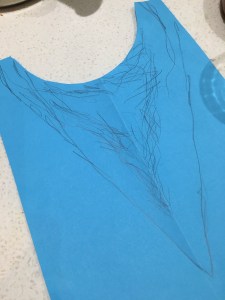
Then on that paper I tried lots of different layouts, placing the bezelled stones in different combinations and positions until I settled on one.  

Next I needed to form a base – I’m not really used to bead embroidery, and had bezelled all of the crystals with a peyote band off an MRAW starter – only the labradorite cabochon was mounted on backing, and the backing was very small (poor planning on my part – I should have just worked on the full sheet and cut down later).  I had intended originally to link the stones with beads, but I had a change of heart and decided to back them instead, so I tacked an additional bit of backing onto the cab piece.  I kept it quite narrow (about a third of the finished width, rather than the full width) as I wanted the bezelled crystals to sit independently of any base, and to avoid the breastplate look so beloved of some bead embroiderers, as it’s just not to my taste.  This was almost certainly extra work compared to bezelling straight onto a backing, but it did allow me to avoid issues around the crystals not being flat backed, and I think the end result looks good.  So anyway, eventually the bezelled crystals were stitched in place onto the backing.  
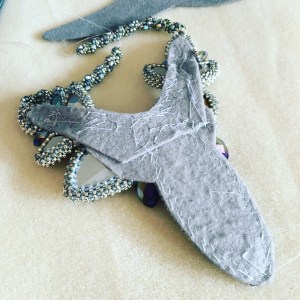
Next I covered some of the backing and added some edge interest by stitching on some faceted drops – I had bought these a while back and they seemed to pick out the blues and purples in the labradorite.  Then things seemed to be getting a bit too flat, so I wanted to add some height – I beaded some herringbone rope which I nestled between the asymetric crystals (they were starting to look a bit like leaves) and then twisted and twined above the central stones – again using etched vitrail, with 8s in the central section and 11s either end to nestle into the gaps.  A couple of matte vitrail etched spikes filled in some more gaps and gave more textural interest, and a gorgeous waterlilly chaton with a rather risky minimal bezel broke up the rope a bit.

I used stacking (one large bead caught down and through with a smaller bead – in this case a mix of 8s and 6s caught with 11s) to fill in the remaining backing – again in the etched vitrail which looks absolutely amazing on the large 6 seeds, and then I was ready to think about a strap.  
I had originally intended to use silver chain because I had expected it to be covered by the dress, but a quick check showed this wasn’t going to be the case, so I felt something which continued the textures round, but was still quite delicate would be a good idea.  Another herringbone rope seemed called for, but I don’t have much luck with preserving a perfectly even tension on these, and with the etched beads this would be even more challenging.  So I went through my bead books and found a lovely delicate spiral rope in a Marcia DeCoster necklace – a bit of substituting gave me a central core of silver 11s, with an outer spiral of etched 11s surrounding either an etched 3mm or an etched 8.  I haven’t used spiral rope for years, but I actually really enjoyed it (after all the experimentation and fiddly bezelling earlier it was quite a relief to have something straightforward and repetitive).

While this was going on I backed the main piece – I wanted to secure the ropes to both the bezelled crystals and the backing first, and then I decided to order some grey rather than using the black ultrasuede I already had – I think it was worth the wait.  That then allowed me to edge – I had planned an extravagent fancy edge, but once I’d put the first brick stitch edge in place that felt like enough for now.
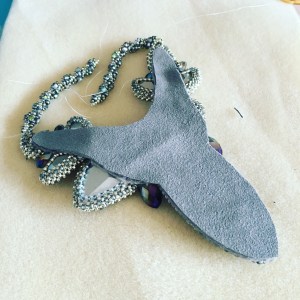
One last quick try on set the length for the rope, and I then followed Marcia’s example and used a simple loop and a rivoli I’d bezelled earlier to form a catch.

Rope complete, it was finally time to mount my favourite crystal – an unbacked vintage stone, which I’d given the barest of netted bezels, and wanted to use free of backing to display the capturing beads and the transparency.  I had hoped to link sides and base with crystals, but wasn’t happy with the visible threads, so I came back to the fire polished etched beads, and then off to seeds.  Then I tried the necklace on and found that the unbacked crystal was digging into the base of my throat slightly, which would have been a real distraction when singing, so I snipped the whole thing off again.
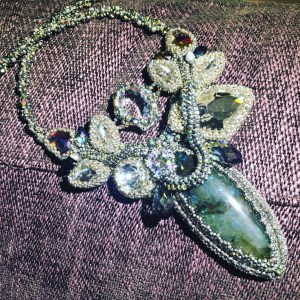
That would be why you’re always told to start new threads to do attachments – makes it much easier to simply change your mind!  That left me with a rather boring top edge to the central area, so another bezelled chaton attached at an angle broke that up nicely, and hey presto ‘Diva’ (what else could you call a necklace for a soprano) was complete.
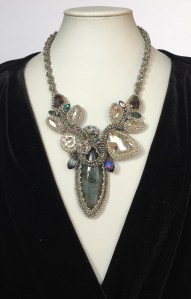
In case you’re wondering about materials, this was made almost entirely from my stash so I’m a bit vague, but here’s what I know:

  • 2mm fire polished etched- Spoilt Rotten Beads
  • 3 & 4mm fire polished, all sizes of seed in etched vitrail – Bead Stampede
  • Miyuki seeds and delicas – Stitch N Craft
  • Vintage crystals (coloured leaves, round) – Old Bicycle Shop
  • Labradorite cabochon – Mark Varah Fossils
  • Nicole’s bead backing & Ultrasuede – Jencel
  • Crystal drops – My Vintage Charms & Creative Beadcraft
  • Asymmetric crystals – small – Swarovski shop in London many years ago – I didn’t have the skill to bezel such awkward shapes then so they’ve sat in my stash
  • Large asymmetric crystal – cheap local bead shop which has since closed!


It’s a good long list – I do seem to get around a bit!

Happy Beading!!
Un-Started Objects

Early last year I wrote a post about my beady UFOs. None of the pieces in that post have really progressed (I have put a couple more humps on the Ootheca cuff, but that’s it).  Then I wrote a piece about the tutorials I was planning to publish – one (my Space Needle Case) is now out in the world, but the others haven’t really moved.  I’ve managed to recreate the CRAW ring, but I’m still not quite happy with how to write up the corner joins….  All in all my beady planning is looking like the opposite of Mastermind – no ‘I’ve started so I’ll finish’ here.  On the other hand, I did get some work finished last year, published a new tutorial, and won a competition, so I won’t berate myself too much.

This year, rather than a series of pictures of lonely, unloved UFOs, a glance through my PDFs on my iPad has prompted a different kind of list – rather than UFOs I thought I’d share some USOs (Un-started objects).  As well as a huge stash of beads I’m afraid I have a large collection of tutorials lurking – I buy them because there is a discount offer, because I simply cannot fathom how something’s been done and I need to know now, because I want to support the artist, or just because I really want to make them.  Because I’m trying hard to focus on original work at the moment the unused ones are starting to accumulate, so I thought it might be interesting to give you a flavour of what has caught my eye (since it may be a while before they appear here as finished or even started beadwork).

So first (and I’ve had these for a while) a set of three from Barbara Briggs bought while I was very into Contemporary Geometric Beadwork.  How I ever thought I would have the time for such substantial pieces made almost entirely of delicas I can’t say, but they are quite amazing:

Fantasy Floral Cuff by Barbara Briggs (image by Barbara Briggs)

Fantasy Flora Cuff

Mermaid Cuff by Barbara Briggs (image by Barbara Briggs)

Mermaid Cuff

Barbara Briggs Dragon WrapFire Dragon Wrap

I’ve been a huge fan of Sabine Lippert for many years, and have completed lots of her pieces, which gives me an excuse for accumulating so many patterns (plus two books) – although I have to say until I wrote this list I didn’t realise quite how many.  Sabine has a sale on at the moment for some of these patterns, and even with the ridiculously low pound they are super value:

Sabine Lippert Tchacka Boom BangleTchacka Boom Bangles – a free pattern using her spiky button beads.

Sabine Lippert Wanna be a ButterflyWanna be a Butterfly – another freebie, this time using her Rizos.

Sabine Lippert TweedTweed – I’ve already beaded the related Baroque Dimensional which has a similar basis – I just need to get organised and pick fire-polished colours for this as I’ll need to do a bulk order as it needs 460 4mms!

Sabine Lippert TurbulenceTurbulence – looks like a lovely, smallish project.

Sabine Lippert - BoomerangBoomerang Bling – another one which needs some planning/shopping, and a fair amount of work, but looks like it will be amazing when finished.

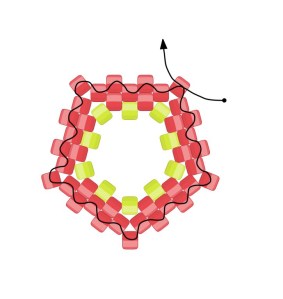
Sabine Lippert Squaricals and PenticalsSquaricals & Penticals – I tried to start this on holiday last year but was a few beads short.  I should do this soon – it looks lovely to bead.

Sabine Lippert Go-Dimensional


Go Dimensional
– a classic Sabine blingy beaded bead – my Rivoli stash is much more substantial now so I should be able to do this without shopping!

From Cindy Holsclaw at Bead Origami (my sister is a big fan, and I love the way Cindy works) courtesy of a small special offer:

Bead Origami Teardrop BubblesTeardrop Bubble Beaded Bead – I love beaded beads and I love Czech teardrops, easy choice.

Bead Origami Supercoiled RopeSupercoiled Beaded Rope – how completely cool is this – I need to know how it is done, and hopefully a bit of a stash buster.

None of you will be surprised to discover some of the fabulous Jean Power’s work lurking in my collection.  As well as lots of tutorials and book projects from her which I’ve already beaded and some inevitable UFOs, I have two still to do:

Jean Power Star FlowerStar Flowers – this is quite new so I don’t feel too guilty about this one.  I have some of the giant acrylic stones already, so this should happen soon!

Jean Power Interlocking CrystalsInterlocking Crystals – this is a Jean classic which I’ve had for years.  I tried it with some cheap rivolis a while back, and it didn’t work because they were a different shape to Swarovski ones, which is fair enough.  I’ll need to take a deep breath before starting this one as the necklace takes over 40 rivolis.

Actually, apart from the huge glut of Sabine’s patterns, and the fact that I also have a pile of beading books and magazines, this list doesn’t look quite as bad as I had expected.  Hopefully I’ll get onto some of them soon – I have all my new cabochons to work with first though, so don’t hold your breath!

Finished beadwork.

As any beader will know, no matter how much jewellery they make, there will always be outfits with nothing to match, and even more pieces which never get worn. Perhaps they are too precious, or too extravagant (there is a definite limit to how much crystal I can wear on the school run or in the office), or perhaps the colours are just wrong. I try and focus my work both for myself and my shop on colours and combos which are wearable, but I often find that because I work in colours rather than neutrals the finished pieces are limited to one (or no) outfits in my wardrobe. Often the beads take over, and I end up beading a lime and orange ring because it looked amazing, even though the two colours I never wear are green and orange. And before you ask, I know they will look good with brown but I never wear that, and if I wear with black I will need other lime and orange things to go with them…..
So recently I’ve been turning my thoughts to how to display the bits and bobs of beadwork that I don’t wear very often. Items I wear a lot (sea anenome, beaded beads, CGB bangles, anything pendanty tend to live in my bedroom, and go in and out of wear with the seasons, but the remainder are a bit lost. Previously they’ve been tucked away in cupboards, or in a box on my desk (it has a clear top so I can see the pretties, but inevitably things are piked on top). Beaded beads live in a lovely polished steel bowl, but again have a tendency to disappear under a pile of beads in little bags when I’m behind on tidying up or putting away deliveries. It’s such a shame, as I have lovely pieces that I almost forget I ever made just hiding away – they can’t influence me if I can’t see them, and I’m definitely less likely to wear them or develop ideas from them.
So last week on the way to bead group I passed a Muji, and popped in and treated myself to a lovely display box.

I’ve been mulling them over for a while, but let’s face it I could buy lots of beads with that money (OK a few beads, not that many really, they’d fit in the palm of my hand), but I was feeling extravangent. Yesterday I filled it up, and I’m quite pleased.

img_5925

Yes, it isn’t perfect, and there still remains the question of where it should live (I really wanted something to hang on the wall above the desk, but couldn’t find anything), so for now it is sitting on a pile next to the messy desk and behind the inevitable toys (prow of pirate ship on right!).

img_5934

It only really works for pendants, beaded beads and smaller pieces, but as I have a short attention span I have loads of those, and it’s basically pretty much full already. It won’t take my bigger bangles and cuffs, and won’t take any necklaces unless they are on a flexible rope or braid (so my last two Jean Power Secret Beadalongs fit in very nicely). It will though house my endless collection of beaded beads in a place that is constantly visible, so when I have to sit through anther episode of ******Thomas the Tank Engine, I can actually be staring at them working out how to make them into a wearable piece.

img_5932

It also gives me an interesting sample of my output over the last few years – my colour palette is less varied than I had expected in many ways, although it has definitely changed dramatically over time from subtle browns and golds to something much much brighter.

img_5930

I still have to solve the problem of what to do with the larger pieces, but there aren’t too many of them and many do get worn, so maybe they can stay in their boxes until I come up with something……

A Handmade Christmas

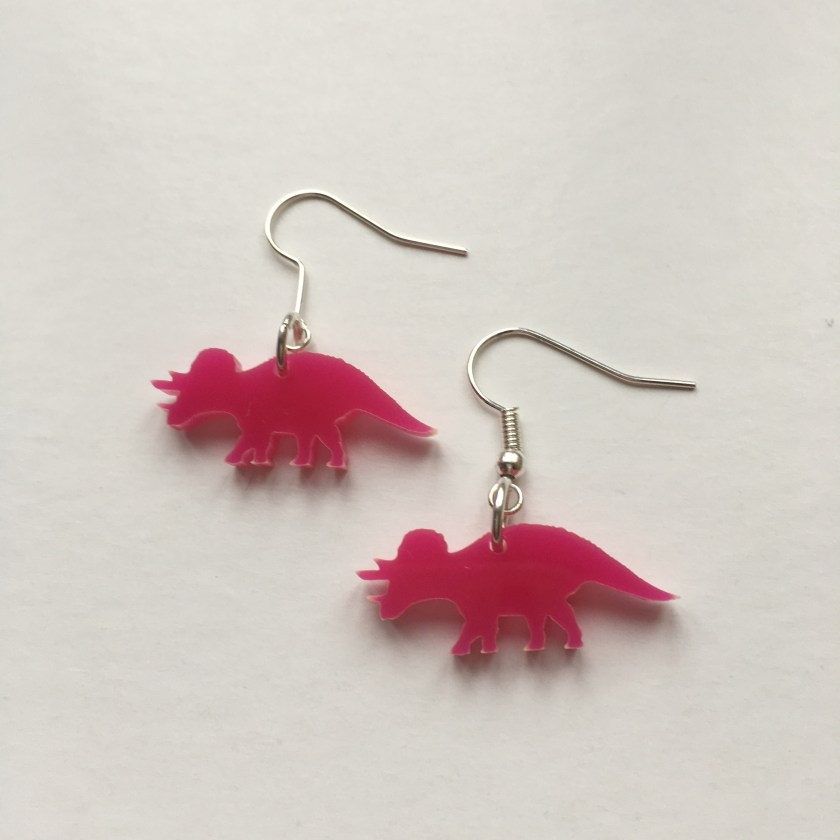
Handmade items make wonderful presents – beautiful and/or unusual things, often unique.  Most Christmases I have a rush of blood to the head and decide to make presents, and most Christmases I’m still working on Christmas Eve to finish them.  So this year I decided to let other makers do the work for me – partly to support them, and mainly because they were making lush stuff.

So here’s what I bought (stupidly I didn’t take pictures, but in most cases you can follow the links to have a nose):

  • A while back I’d spotted Layla Amber’s lovely shop on Etsy.  She makes gorgeous laser cut wooden jewellery, and as December approached I bought myself a lovely Christmassy  Winter Robin necklace and robin earrings, which I wore lots.
  • They were so nice I bought some more earrings as my office Secret Santa gift, and a Winter Robin Brooch for my Aunt.
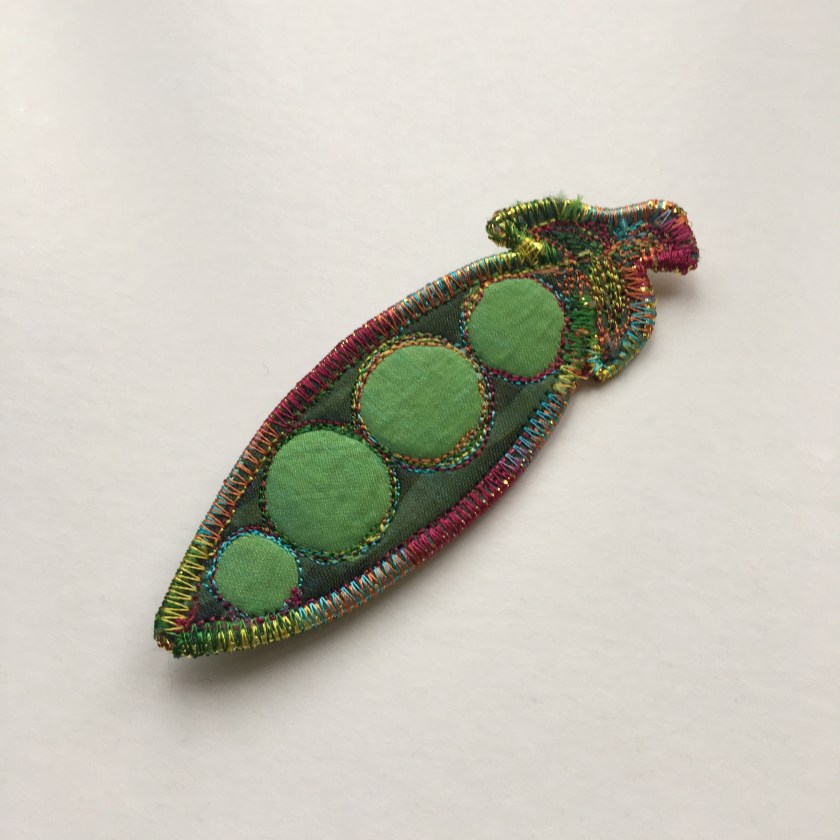
  • I’ve also been Folksy stalking Sue Trevor – she makes gorgeous machine embroidered badges, bowls, mirrors, decorations and generally lovely objects.  I used to do some machine embroidery, and would like to come back to it one day (obviously with added beads!), so I’d be watching Sue’s work with interest, and when she listed some lovely decorations I couldn’t resist.  So my sister-in-law has a lovely autumn coloured apple for her Dorset cottage, and my Mummy now has a fabulous bird watching from a small window in Tudor Cottage.  I suspect Mummy will also be inspired by Sue’s work – as a quilter she’s done some similar work in the past, and Sue’s use of hand-dyed and other interesting fabrics is right up Mummy’s street.  Again I got quite carried away, so my mother-in-law has a great badge, and as I bought a couple of ‘spares’ I have both a bigger badge , a pocket mirror and best of all a supercool peas in a pod brooch:

img_5867

  • Slightly less ‘handmade’ but no less appropriate as presents were some mugs from We Are Paper Plane on Etsy – a fun graphic design team.  It’s the bigger boy’s teacher’s first year teaching so we thought she wouldn’t have too many ‘best teacher’ type presents yet, so she got a named mug.  Daddy is famous for his jokes, and definitely needs some new ones – this should help.  And our wonderful childminder is quite keen on prosecco, so this mug should give her an adequately sized vessel to put it in!
  • And finally for my beady little sister, something for her to handmake – a very un-Christmassy Boneyard Bauble from Spellbound Beads.  Jean Power was making one at bead group a while back, so I grabbed one for Susie at the Big Bead Fair.   The skeleton in particular is brilliant, and picked up a little kit for some tiny spider earrings to make for myself as well, for which they have a free pattern.

And now the really good bit – I suggested to my husband that if he or anyone else is ever stuck for presents, he could just look at what I favourite on Etsy or Folksy and he embraced the idea with gusto!  So I now have a wonderful collection of beautiful items:

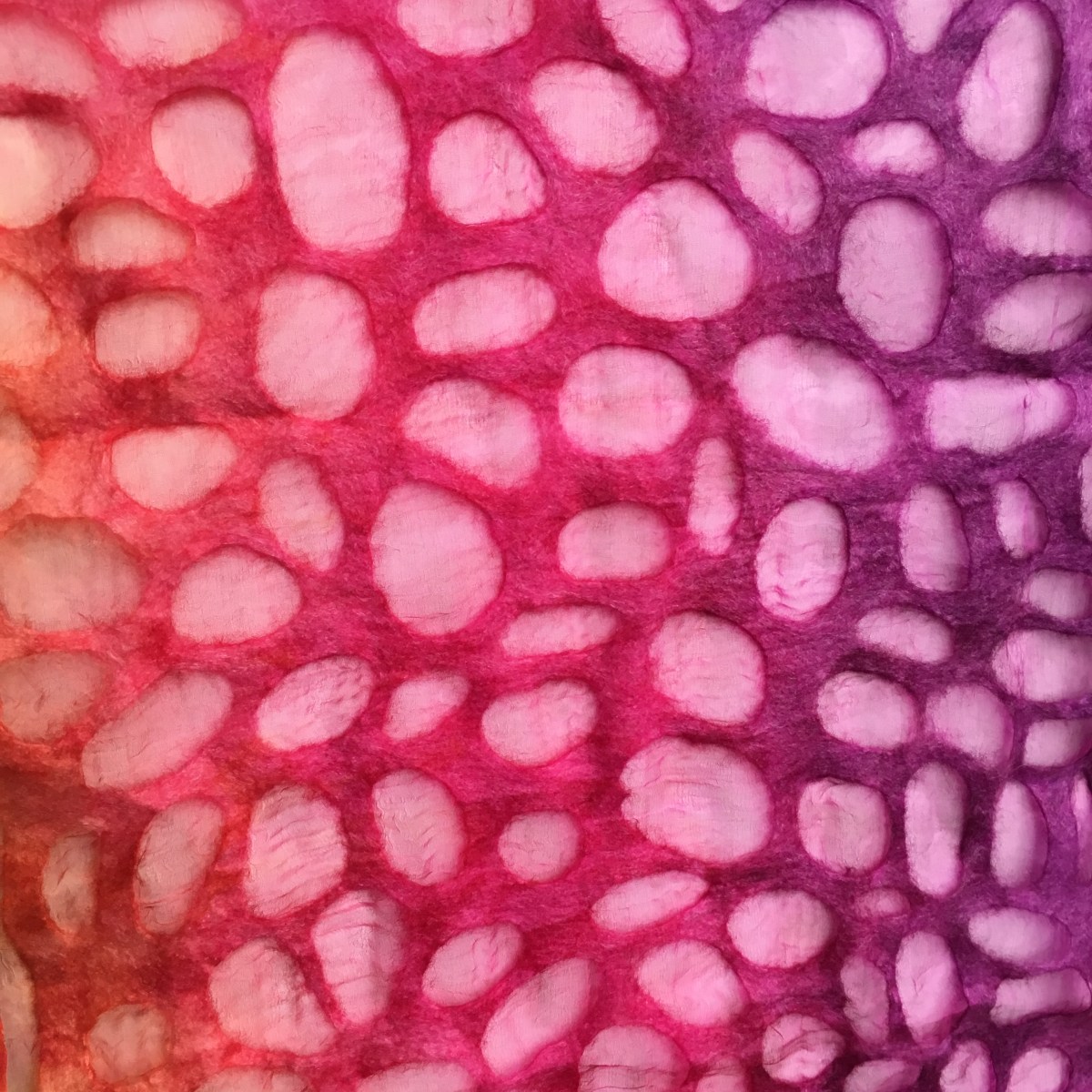
  • From Kate Ramsey Felt, a completely wonderful scarf in my colours, along with a cuff and a keyring.  These are just so gorgeous, and as a bonus they smell gorgeous, presumably because of the soaps used in the felting process.  I’ve been watching Kate’s work for many years, having had a dalliance with wet and needle felting a while back (which I now feel the need to revive).
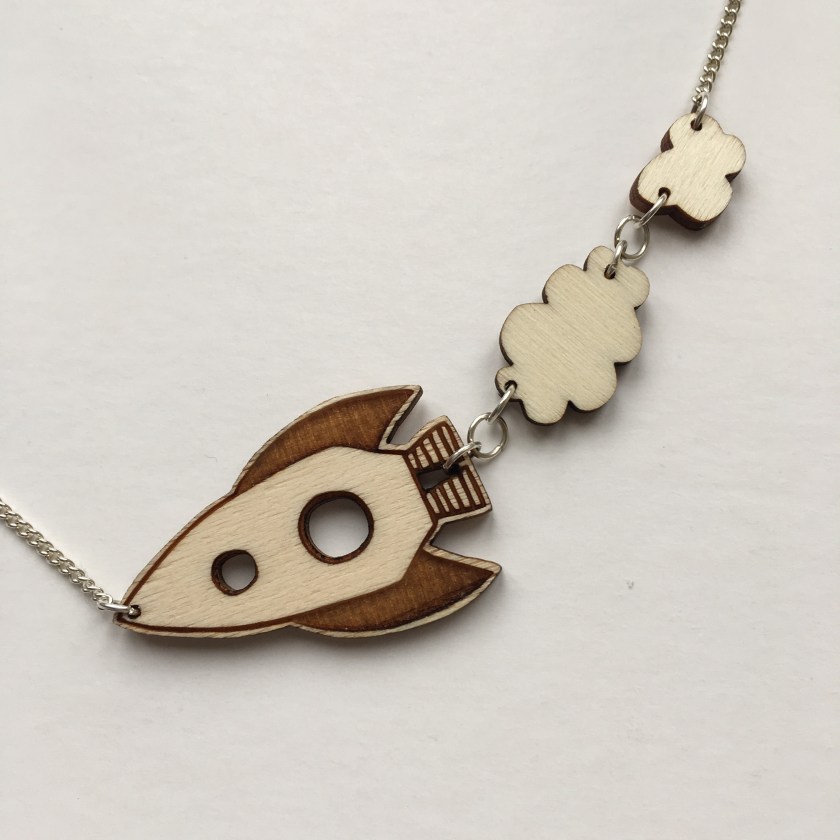
  • From another Kate at Kate’s Little Store a lovely rocket – space is a big favourite in our house and it’s nice for me to be able to join in.

img_5864

img_5866

So all in all, a lovely handmade Christmas – everything arrived promptly and beautifully packaged, and was a real pleasure to give or receive.  Thank you to everyone who helped!

Crimson Frog Fish

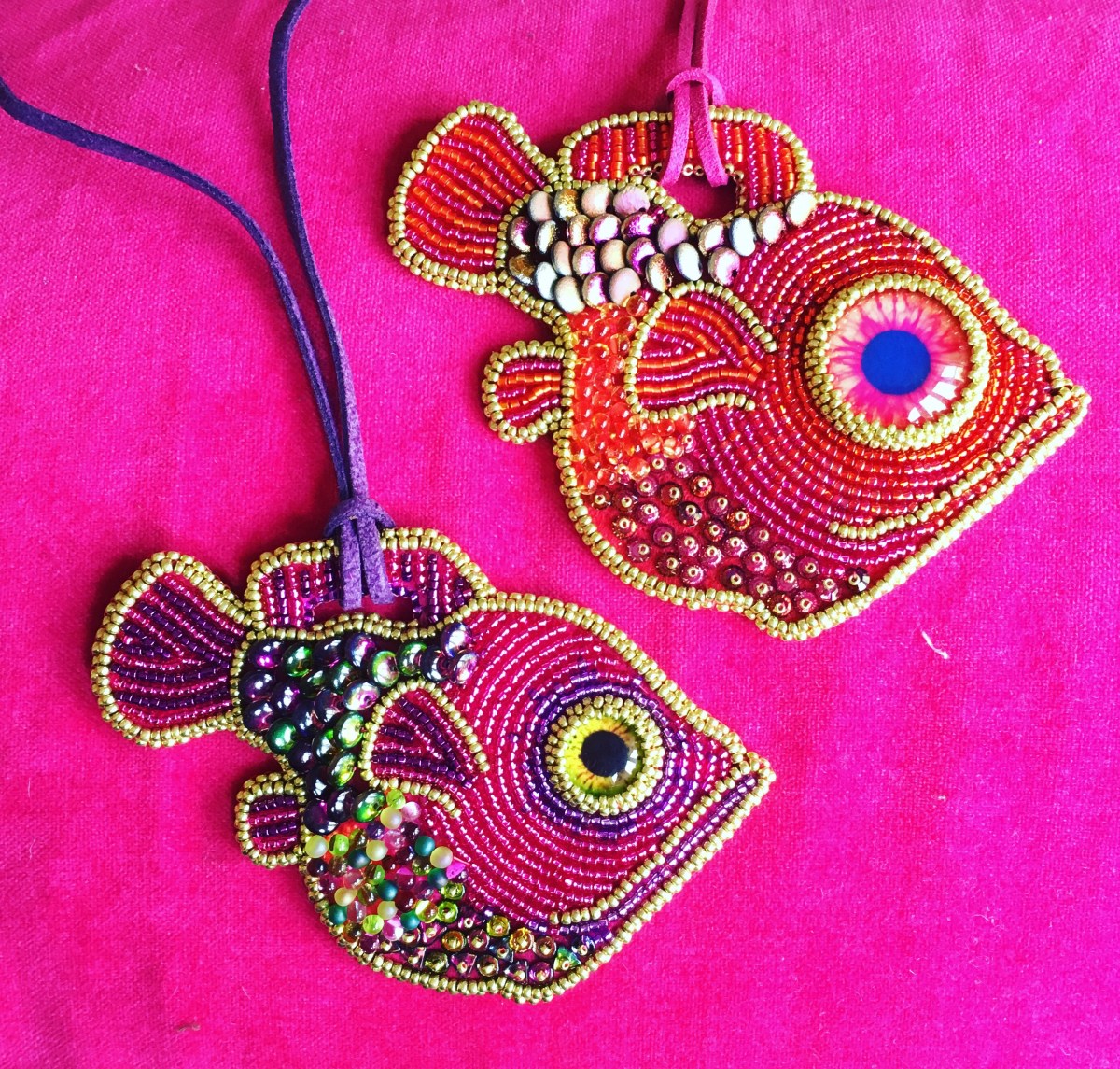
Having been reminded of her gorgeous work in the recent Stitch and Craft  brochure, I googled Kinga Nichols to see if she offers kits or tutorials for those of us unable to get to classes.  She does, but her Etsy shop is a bit empty as she’s just been away – this is probably just as well given that I have far too many beads already, the pound is low, and postage from the States is horribly expensive.  However, further googling turned up her new video tutorial for Interweave.  I’ve used free video tutorials in the past to help with things like knitting and sewing, but never for beading, and to be honest, never paid for.  But it’s something I’d maybe like to try doing myself one day, and I’d just bought a fantastic eye cabochon from WingSmith and some red bead foundation from Jencel at the Big Bead Show, so it felt like the beady universe was saying ‘go on go on’,  so I splashed out the rather steep $19.99 and had a go.

We made a fish.  She is rather lovely, and ugly at the same time, and I really enjoyed making her.  I have learnt about glues, fabrics etc, drawn and cut out my base (the tutorial claims to be focussed on working with pre-cut foundation, but to be fair other than the fact that we are using one, it’s not about that, it’s really about making a lovely beaded fish).  I’ve at last sorted out my back stitch (which I’d never got to like previously), and I’ve added a bezel to the glued on eye, seeded on some Swarovski lochrosen (glass sequins), drops and best of all added some lentils to cover a huge space in no time at all!

The video is well structured, with good, clear explanations of the key stitches and techniques.  There is possibly a little too much of watching Kinga do back stitch, but one can always fast forward.  It’s certainly possible to watch and bead, and then just pause when you need to catch up, which works well so long as you have a device/PC next to your beading area (in my case this consists of an iPad on the arm of the sofa).  It’s certainly been the best bead embroidery technically that I’ve done, and I think Kinga deserves full credit for that.  The next test will be to see whether I can appy this to some designs of my own.

I enjoyed making the pink and red one so much that I’ve made a second fish in pink, green and purple – this time the correct size (I scaled the first up as the eye I had was huge), and I see more of these plus some other Kinga style bead embroidery in my future…….

Hints & Tips

  • Interweave sell this as either a single video ‘download’ (there is a second project available as well) or as a pair of projects on DVD.  The downloads are $19.99 each (so $39.98 the pair), the DVD pair $34.99.  I don’t know who does their accounting, but that feels like a rip off.  The downloads should cost significantly less to sell, and yet are more because you can’t buy the pair.  With the pound low this works out as at least twice what I would normally pay for a tutorial, and more than the price of a book for a single project.  If you are based in the US and can buy the DVD set then that will be a reasonable deal – otherwise for UK based beaders I’m not sure I can recommend based on price.  As I write it is reduced to $15.99, so if you live somewhere with a favourable dollar exchange rate, it may be worth a buy!
  • If you are using an iPad or iPhone, they are not even downloads – you are effectively buying access to stream the video, not to save it on your device.  Yes, I will when I have time download it onto my PC, but I’ll want to watch it on my iPad or iPhone so will have to get dear husband to transfer it on.  This is governed by the way that Apple run downloads onto iPads and iPhones, and is not something Interweave alone can change, but a more substantial warning before purchase would have been appreciated.
  • There’s a PDF included with a template of the fish to trace, which is great, but no materials list.  You have to work out as you go along what beads you will need, and for me, that was quite annoying – I like to pull together the right beads (or roughly the right beads) before I start, so that I know I can bead all of the way through without having to go hunt out or even buy additional beads.  A written tutorial or magazine project would always contain a list, so why not a digital download.  Even just talking through the materials required at the beginning of the film would have helped………hopefully though my list in the Recipe below will be of some use!
  • Coloured bead foundation is a must here – going back to the lack of materials list you’re going to be pretty disappointed as you can’t start without it.  Coincidentally I’d bought some red and pink Nicole’s Bead Backing from Jencel at the Big Bead Show, so was kitted up ready to go.  It’s the first time I’ve worked with it, rather than using white Lacey’s Stiff Stuff or Beadsmith Bead Backing and it was really, really liberating.  Using a backing that compliments or even contrasts with your beads, which you’re happy to show through makes everything easier, and means you can use larger beads with ease without having to fuss filling in the tiny gaps with seeds, spoiling the effect and multiplying the work! I’ve invested in some more colours now, and I feel that having a good backing colour will make me more confident and bold with my beads.
  • I didn’t really want to make a big, heavy cuff, and didn’t have the right materials to do that anyway – instead I had a look at the other fish pieces Kinga has done and spotted that sometimes she puts a hole in the upper fin and uses that to thread a cord through, making a pendant.  This was relatively easy to do, although I’m slightly worried about the strength of the loop – will it distort in use?  Another time I’m going to cut a piece of plastic (from some washed veg packaging or similar) to sit between the foundation and backing to provide additional strength.  I may even consider doing this for the whole piece as with so many heavy beads on it does feel like it could do with some extra stiffening.
  • I didn’t have the petals Kinga used for the scales – instead I used some lentils I’ve been sitting on for a while, and I think they also work really well.  As they are smaller than the petals I decided not to add seed bead stalks, as the holes are reasonably inconspicuous.  That meant I had to work from the tail inwards to get the layering of the scales right (Kinga is able to work the other way as her petals sit further off the foundation with their beaded stalks, so can be pushed aside).
  • Big eyes are better – the second fish I made has an eye closer to the outline provided (15mm), and I don’t think she is as fun as the first one, which has a much larger eye (25mm) in proportion to the rest of the piece.  If you’re working using the template, I would use a 20mm eye.
  • Dragon eyes (with a vertical slit for a pupil) don’t look as nice as ‘normal’ eyes.  Don’t know why, they just don’t look as friendly.
  • They’re pretty big and daring, even for me to wear.  They may take a turn on the Christmas tree this year………..

img_5509

Recipe

Creative Bead Embroidery 1 with Kinga Nichols: Working with Precut Foundations Video Download

Coloured beading foundation to tone with your main colours.  I used Nicole’s Bead Backing in red (red & pink fish) and fuchsia (pink & purple fish).

Backing – tone, contrast, compliment, whatever – I used Ultrasuede in fuchsia as it’s easy to work with and I had some, although Kinga suggests leather instead as it is more durable.

Glass eye cabochon – I used a 25mm from Wingsmith for the red/pink, and a 15mm from Kookeli for the purple/pink.  Next time I’ll use a 20mm (see Hints & Tips).

Seed Beads:
  • Size 11 in at least three colours (an outline colour, a main colour for the backstitched circles and one of the fin stripes, and a third colour to give some contrast round the eyes – you could work with more than two colours in this area).  I used Duracoat Zest 4205 as the outline and Silver Lined Fuchsia 1436 as the main for both, with Silver Lined Vermillion 1010 for the red/pink fish and Silver Lined Purple 1446 for the purple/pink.  All Miyuki of course.
  • Size 15s – just a few to close the eye bezel and for attaching the lochrosen – Duracoat Zest 4205 for both fish.
  • Size 11 delicas in a contrast to form the stripes on the fins.  I used Silver Lined Frosted Orange 682 for the red/pink fish, and Galvanised Dark Magenta 463 for the purple/pink.
Feature Beads:
  • For the belly, Swarovski Lochrosen in 4mm (Fuchsia & Light Siam) for the pink/red fish, and O-beads and Tri-beads in Magic Orchid for the pink/purple.  Kinga uses the Swarovski in two sizes, which would be lovely, but I don’t have them and they seem to be very difficult to get hold of at the moment.  Probably a Strictly Come Dancing induced shortage.  The O and Tri beads worked very well though, and are more economical.  If you’re using a ‘magic’ coating, make sure the coated side sits at the back, so that the transparent side sticks up giving you the sparkle.
  • Next along the belly, some 3.4mm Miyuki drops – ideally transparent, with optional colour lining rather than a frosted or opaque – they’ll look like glossy bubbles.  I used red lined topaz for the pink/red and a pink/green mix for the purple/pink.
  • And finally, some larger, flattish beads for the scales – Kinga uses Petals, but I didn’t have any so I tried Lentils and they worked well – Etched Crystal Full Marea for the red/pink, and Magic Orchid for the purple/pink.  Again make sure you use the beads the right way up to get the best from the coating.

All in all not the best value, but well explained and demonstrated, and a fantastic, enjoyable project which I plan to repeat. A lot.

Space Needle Case Tutorial

So I’ve finally finished a new tutorial.  It’s been a long time in coming – it’s the needle case from the Chatelaine I made for a Stitch n Craft challenge several years ago, and whilst my Baroque Tape Measure Surround has been available for a while now, it’s taken ages to get this one done.  That’s not because it’s tricky, or complicated, more because I’ve not until recently managed a really concentrated period of work to get it done, so I’ve ended up reworking more than I really needed to.  Anyway, I’m really happy that it’s done (and all of that rework has simplified some of the stitch paths and dealt with some tension pitfalls), so here it is:

dsc_0469

It uses those standard wooden needle cases you can get for making peyote tubular wraps, but has a twist – it uses RAW to cover the case, so it shows through the finished piece, so must be coloured to match (or contrast), and then the ends and opening are built out to form a very solid surround for a 14mm rivoli.  The finished embellished sections with their pointed rivolis reminded me both of flying saucers, and of the Space Needle in Seattle – hence the name.  As part of my Chatelaine it formed one of the more substantial elements alongside my Baroque Tape Measure.

It’s really an intermediate level piece – there are full instructions for completing every step, including the basic RAW sections, and none are particularly tricky, so in theory a relative beginner could follow it, but I would say that you’d need to be confident of an even, controlled tension, and be able to handle beadwork that is fighting back a bit, so if you’re a beginner maybe work on some more basic RAW projects before you buy this one?  It’s not going anywhere anytime soon……

It’s available for instant download from Etsy (EU buyers note VAT will be added on top of the selling price)  or from Payhip (where I can absorb the VAT in the selling price).

And I’ve been super organised, so materials packs containing all of  the beads and crystals you need, plus a pre-coloured needle case are now available for from my Etsy and Folksy shops.  You can choose between a long or a short needle case to suit the types of needles you use, and there are four colourways, available in either length.  Or all of the details of the beads used in those colourways are in the tutorials, so you should be able to recreate them without too much trouble, or even better, design your own!


Fantasy Workshop shopping

Last week the Stitch and Craft workshop schedule for next year came out, and it got me really salivating.  Utter lushness, in the lovely Dorset countryside.  Bookings open on Thursday, and some workshops will go incredibly quickly because they are incredible designs from internationally renowned beaders.  Plus they are at the SnC Studio which in itself is a beader’s paradise, and frankly worth coming up with any excuse to visit (including ‘but I really need to learn how to make this so I have to go there’).  I don’t think I’ll be able to make it to any classes, family and work being what they are, but I’ve indulged myself with a little fantasy workshop selecting – perhaps one of you could go instead?

So, first to some of my beady friends, starting with the fabulous Jean Power.  I think I’d go for her ‘Iskra Box’, or possibly the ‘Tetra Star’, as I’ve seen elements of these in development and thought they were amazing.  Jean’s a great teacher, and really fun to bead with – we’d have a ball.

My new beady friend, Shona Bevan is teaching a few pieces – I loved her ‘CRAW Donut’ when I saw her wearing it a couple of months ago – it’s put together with such confidence and elegance, and yet it’s so daringly simple in terms of colour.  Then again, she was wearing one of her ‘Borgia Pendants’ last week and that was completely lovely.  Plus she is a scream in person so again we’d have a fab day.

When I met Sian Nolan for the first time on the Stitch and Craft stand at the Big Bead Show, she was I think wearing her ‘Flowers in the Snow’ – I couldn’t stop staring at it so I’d love to learn how to make one.  The use of I’m guessing lentils round the edges is inspired, and I have just the ones in my stash already…….

As many of you know, I’m a big fan of Sabine Lippert – from her I’d go for either ‘Night and Day’ or ‘Charming’.  Laura McCabe is coming over, and although she’s not teaching her more avant garde pieces, I think her ‘Modern Medieval Bracelet’ would give a good insight into some of her techniques.

I’ve made a few of Heather Kingsley Heath’s designs, and really enjoyed them – her ‘Samarkand’ includes fabric which really intrigues me, but then again her ‘Bumble Bee’ is adorable.  And ‘Serpentine’ looks lovely……

I’ve been trying to up skill my bead embroidery lately, and luckily my newest obsession (kicked off by the arrival of this very brochure) is the bead embroidery of Kinga Nichols.  I’ve just splashed out on her Interweave video featuring a fantastic fish (and started beading it), so I wouldn’t pick that class even though it really appeals – instead I think I’d love to learn how she achieves such lovely textures and shapes in her abstract pieces, so would go for the ‘Bees Knees’ pendant – very wearable as well.
Looking at some of the other classes, ‘Nuts & Bolts’ by Heather Collin (taught by Lynn Firth) caught my eye.  It looks like an intriguing construction with an opportunity to play with colour, which is obviously a plus for me, and very wearable.  Then the lovely Lynn is also teaching some of her own pieces as well…….  There’s a bead crochet class with Gillian Lamb which might be a good idea (I really cannot get the hang of it on my own), and then there are classes from the incredibly elegant Maggie Meister, and exploration class using Hubble Stitch with Melanie de Miguel, and oh the list goes on, so it’s just as well I don’t have to choose.  If you can though, do, and you will definitely have a lovely time.

Perl Art

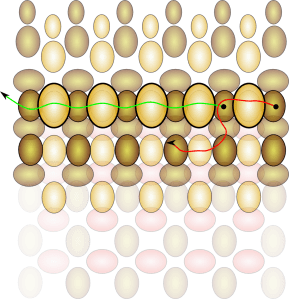
I’ve been playing recently with a new App for iPad called Perl Art. I prefer diagrams to photos in my tutorials, and up until now I’ve been using some free software called Inkscape. It’s a generic vector diagramming program, and although I’ve got the hang of it now, after a bit of reading around I thought it might be worth giving Perl Art a try. I loved the idea of something formulated specifically for beaders, and of working on the iPad so I don’t have to fight for access to our home laptop. Well, after some initial hiccups I’ve been really pleased with it – I would say at the moment it won’t replace Inkscape for me, but I will be using it for simple designs, and enjoying it.

I thought some of you might be interested in how I’ve got on and why I’m saying that I like it, but can’t use it for everything, so I’ve jotted down some pros & cons:

image
Pros

  • Available on the iPad.  I love my iPad a lot.
  • Optimised for touch, and I believe you can use a mouse with an iPad if you find touch tricky.  If I had an iPad Pro with a stylus it would be extra brill, but let’s face it they are horribly expensive.
  • Perl Art is a specialist application just for beaders – nothing else cluttering things up, and a lot less to learn than Inkscape or similar.
  • Nice simple user interface.
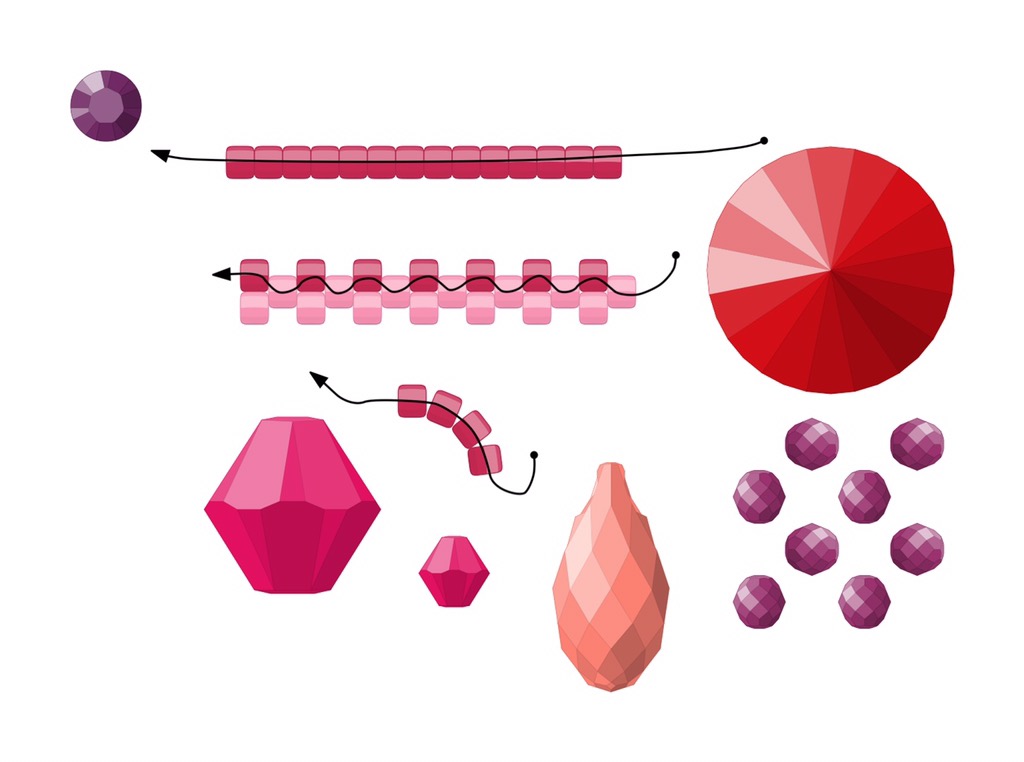
  • Key bead types available ready rendered, accurately sized/shaped.  I have to build each bead myself in Inkscape, guessing at the rough size in comparison to other beads, select a rough colour and then add a custom colour gradation to make them look 3D.  This takes a while, and there is no way my Inkscape rivolis, bicones and fire polished beads look like these Perl Art ones:

img_0208

  • There are a good range of bead sizes and types – add on packs (some free, some pay) available.  More about this in the Cons though.
  • The developers use manufacturer’s colours, sizes and other specifications, so you’re getting an accurate digital rendering of real beads – realistic enough to look good, but not so realistic that they clutter up the diagrams.
  • Lovely responsive development team – always respond to queries and comments quickly and seem very keen to collect and act on feedback.  Lysann Lamontagne, the creator is a beader herself, and her tech team seem very good (Alexandre has been very helpful!).
  • Fantastic grid function – click on a bead and select a couple of settings and Perl Art will draw you a grid of beads in Peyote (1 or 2 drop), RAW, This is really, really useful – one comment would be that they haven’t counted the rows out quite right on Peyote – I would say that a row is one way either right to left or left to right, they say a row is both ways – right to left and then back to right again, so you can effectively only add what I would call 2 rows at a time. But it is super easy to delete the unwanted beads so it’s not really a problem, just slightly confusing initially.   In the example below I was able to very quickly make the peyote sections, and then simply delete the beads either end of the shorter rows to get the required shape.  Much, much quicker than manually creating a grid. So if you’re doing flat peyote or flat RAW pieces this will beat Inkscape hands down, and I’m looking forward to using it for that!

img_0190

Cons

  • Only available on iPad – not iPhone (although this would be fiddly on the small screen), and not as far as I know on other platforms.
  • You can’t build your own beads – so if the bead type you want isn’t on there, or in one of the extension packs, and you can’t use a similar bead type instead, then you are stuck. That said, I’ve asked for 8mm Swarovski chatons via the feedback function and they’ve said they’re all coded up ready now and will be in the next pack, which is super service.
  • I’m still struggling slightly with getting a thread path that I’m happy with – in Inkscape I can adjust quite carefully, so it’s easy to show complex thread paths which go back on themselves, or round and round, and I can also add arrows intermittently along the thread, rather than just at the end.
  • I also can’t quite seem to get the thread to hug the centres of the beads in the way I’d like, but to some extent I think I can live with this if I stick to simple designs.
  • I like to highlight the beads being added in that step – in Inkscape I do this by increasing the width of their outline (see Inkscape example below), and I’ve seen other beaders use coloured outlines. There is no option to do this in Perl Art at the moment (as far as I can see), this would be top of my list for enhancement requests.step12
  • And finally, and my second enhancement request, there is no option to fade out layers of beads – in Inkscape I can use the layers function to make previous layers of beads more transparent so that they fade on the page, and allow the beader to gauge the location of the old layers but focus on the current one (see above). Additionally I can fade individual beads at say the edge of an area to give a 3D impression, although this is less important.  For single or maybe two layered pieces this lack of control won’t be a problem, but for complex multilayered pieces, and anything truly 3D I will need to stick to Inkscape.

In the end I think Perl Art is largely aimed at amateur beaders looking to share their designs, rather than pros, which makes sense in terms of the functionality they’ve included.  I’d obviously be very pleased if they are able to build more functionality in over time, particularly adding the option to highlight beads added in a step, and to fade out previous layers, but even without it for now I still think this is a splendid effort and I would definitely recommend it for simpler designs.   I used it to chart my Hollow Dodecahedron, and it only took a couple of hours – for a first attempt that’s pretty good, and probably much faster than Inkscape.

image

I bought it using an offer from Beads Direct, making it £17.99, which although it feels expensive for an app compares very well with some of the bead charting software currently available (which is no use to me anyway since I don’t really go for charted work) – I’m not sure if the offer is still on, but just in case the link is here.  When I clicked through the link from the Perl Art website  to the App Store it showed as £17.99 anyway.
So if you fancy having a go at drawing up your designs, or already do and want to try a new way, I’d recommend giving Perl Art a try.

Some more Materials Packs

As well as the new spiky packs I’ve managed to create some new colour-ways for my Baroque Tape Measure, and resurrect some previous ones.

The new ones are:

Medium Vitrail
Medium Vitrail
Bruised
Bruised
Ruby & Gold
Ruby & Gold
Caribbean Sunshine
Caribbean Sunshine

And the resurrections are:

Tequila Sunrise
Tequila Sunrise
Ruby & Old Gold
Ruby & Old Gold
Scarlet, Silver & Gunmetal

As usual they are available in my Folksy shop (click on the pictures) or my Etsy shop (here for the new colours, here for my completely favourite Tequila Sunrise, or here for the Scarlet or Ruby).  And finally, the tutorial itself is available for instant download via Etsy here (VAT will be added if you are in the EU), via PayHip here (no VAT), or if you don’t mind waiting for me to e-mail via Folksy here (no VAT).