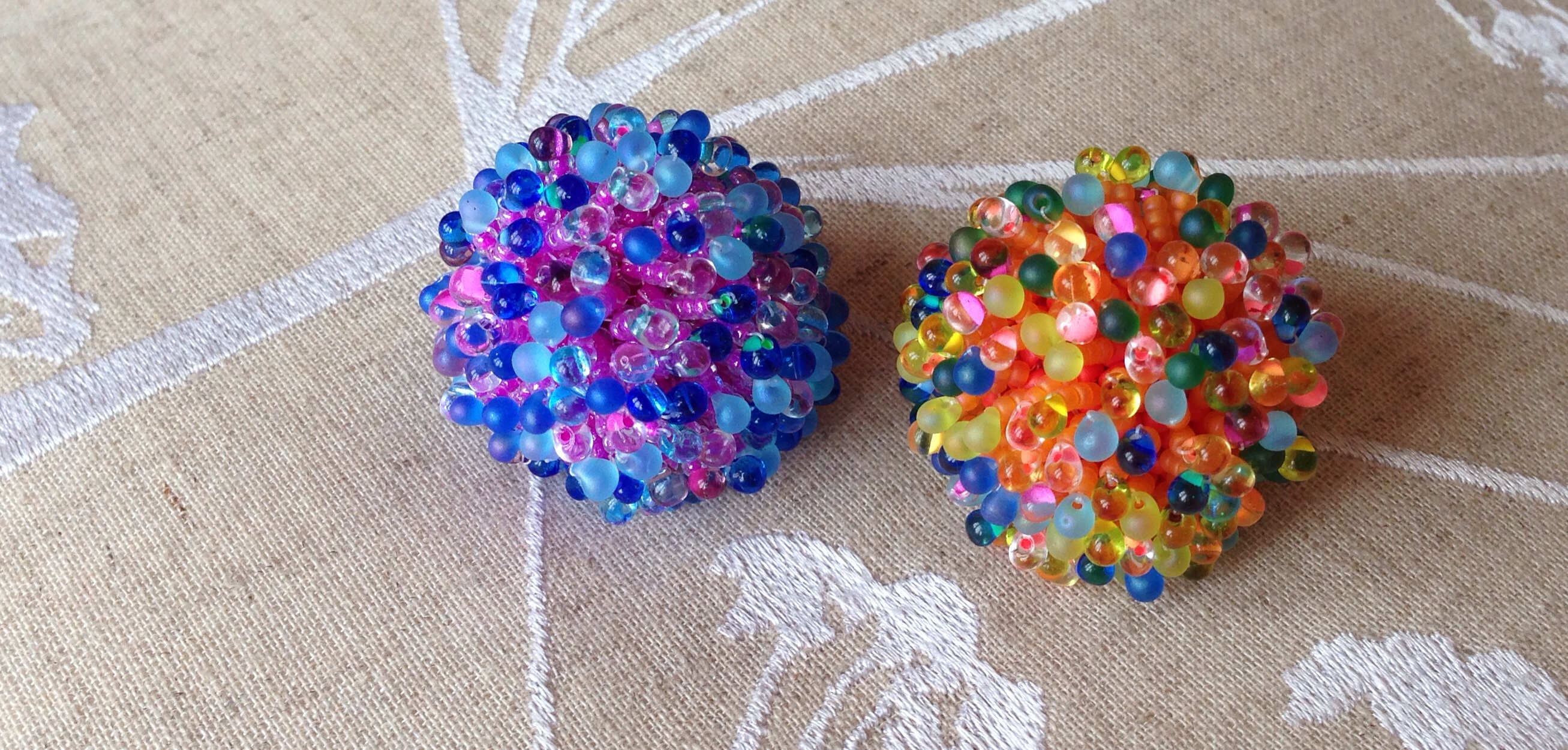
Adapting

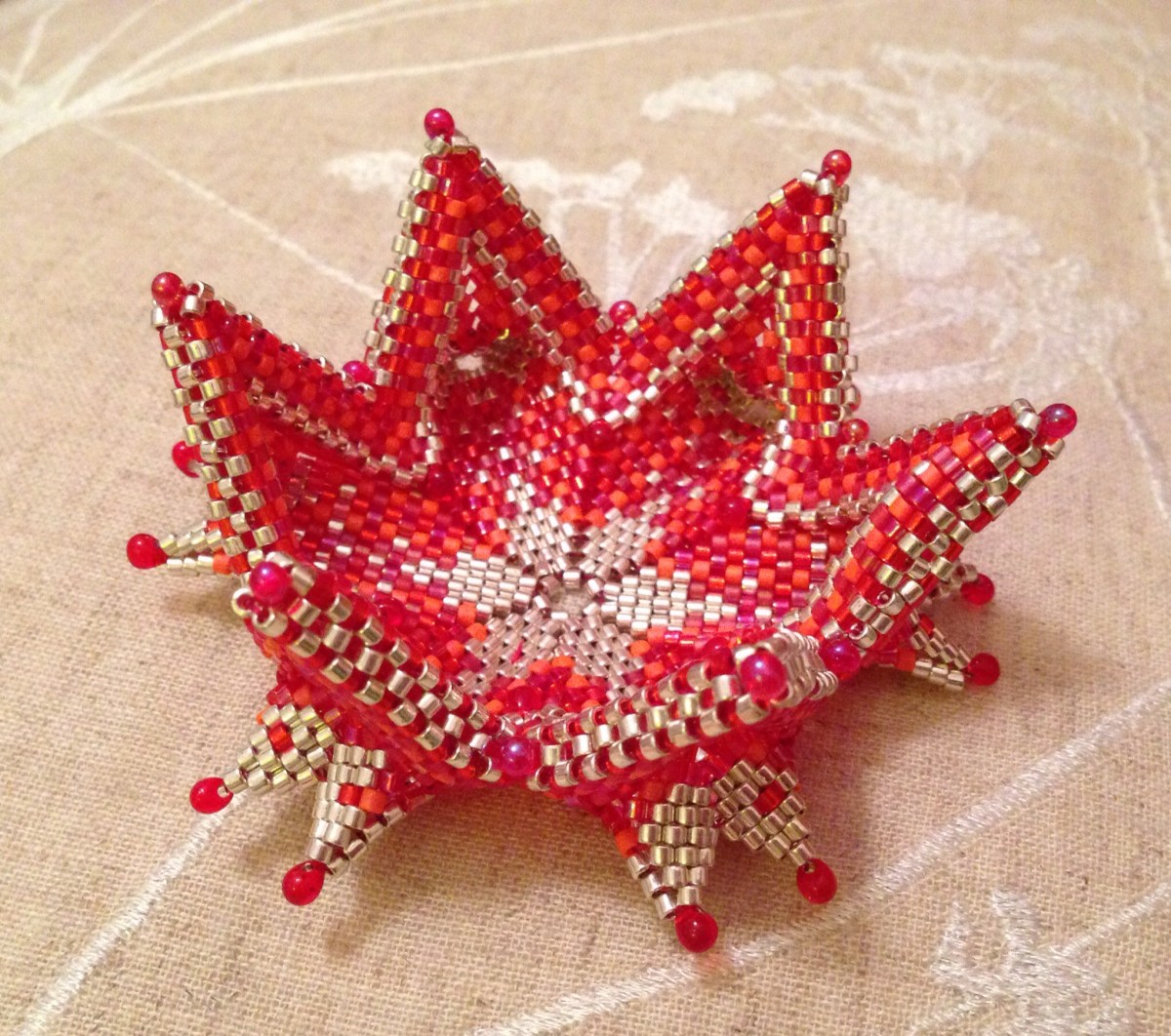
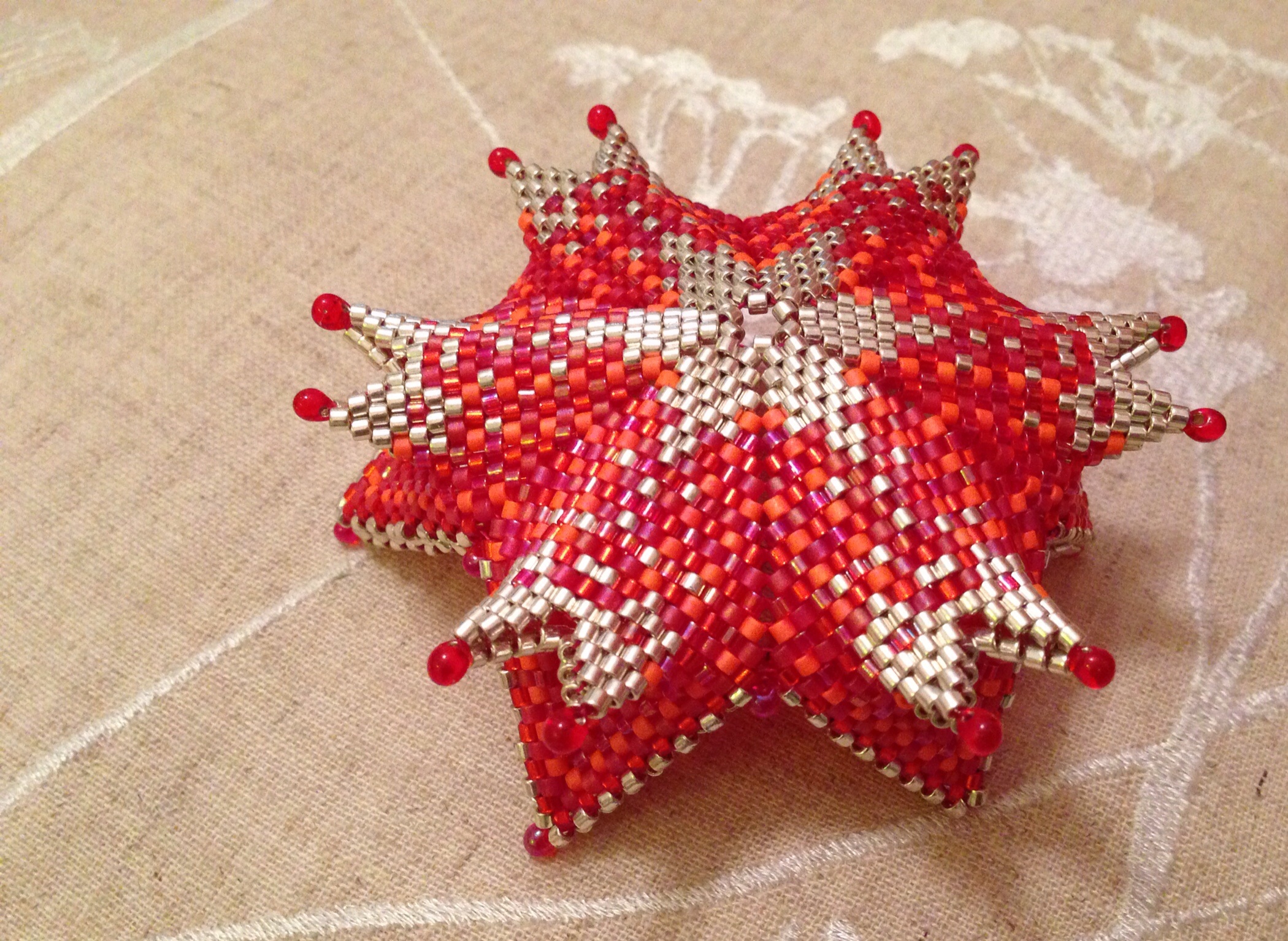
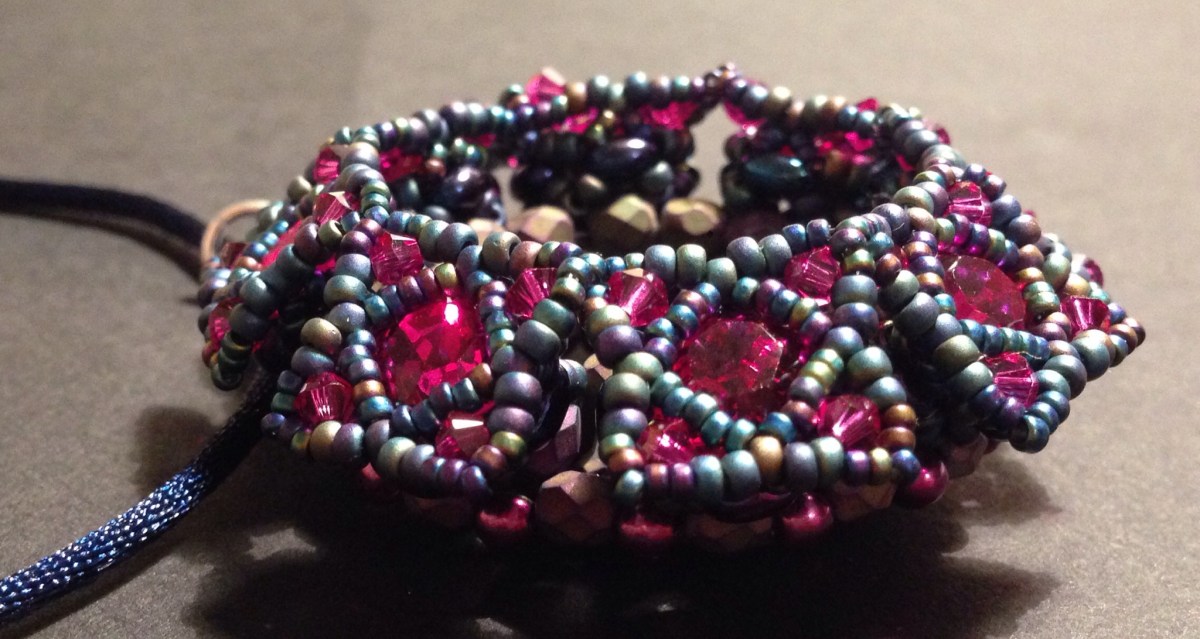
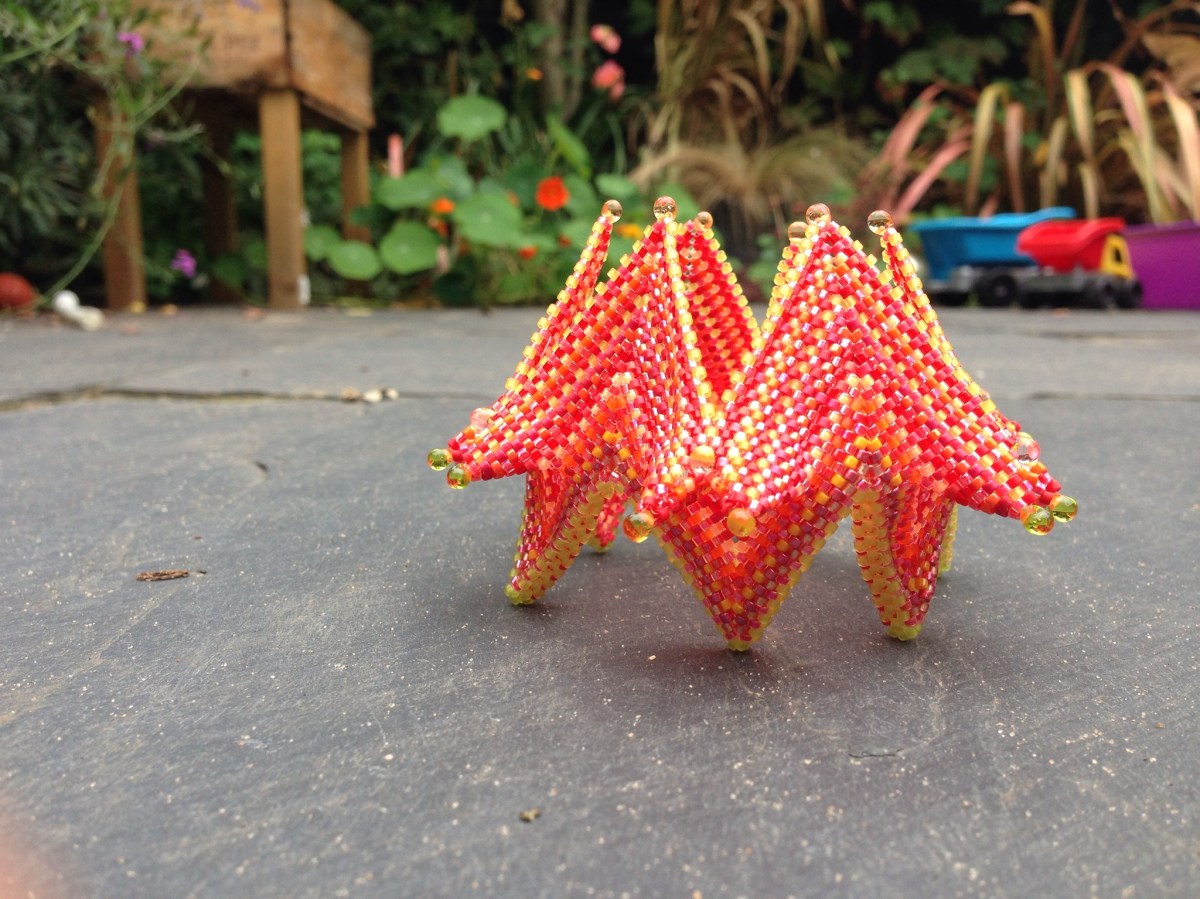
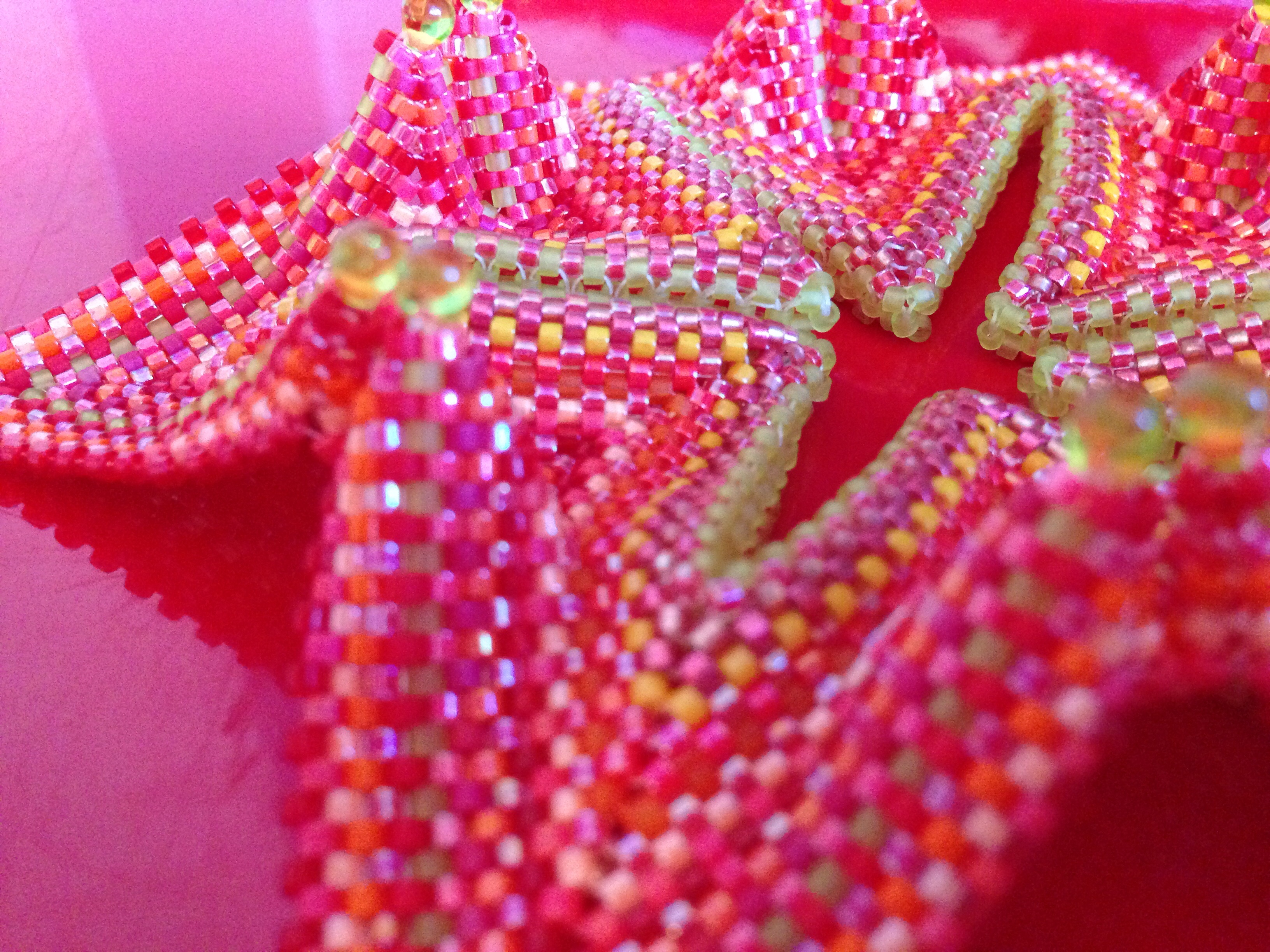
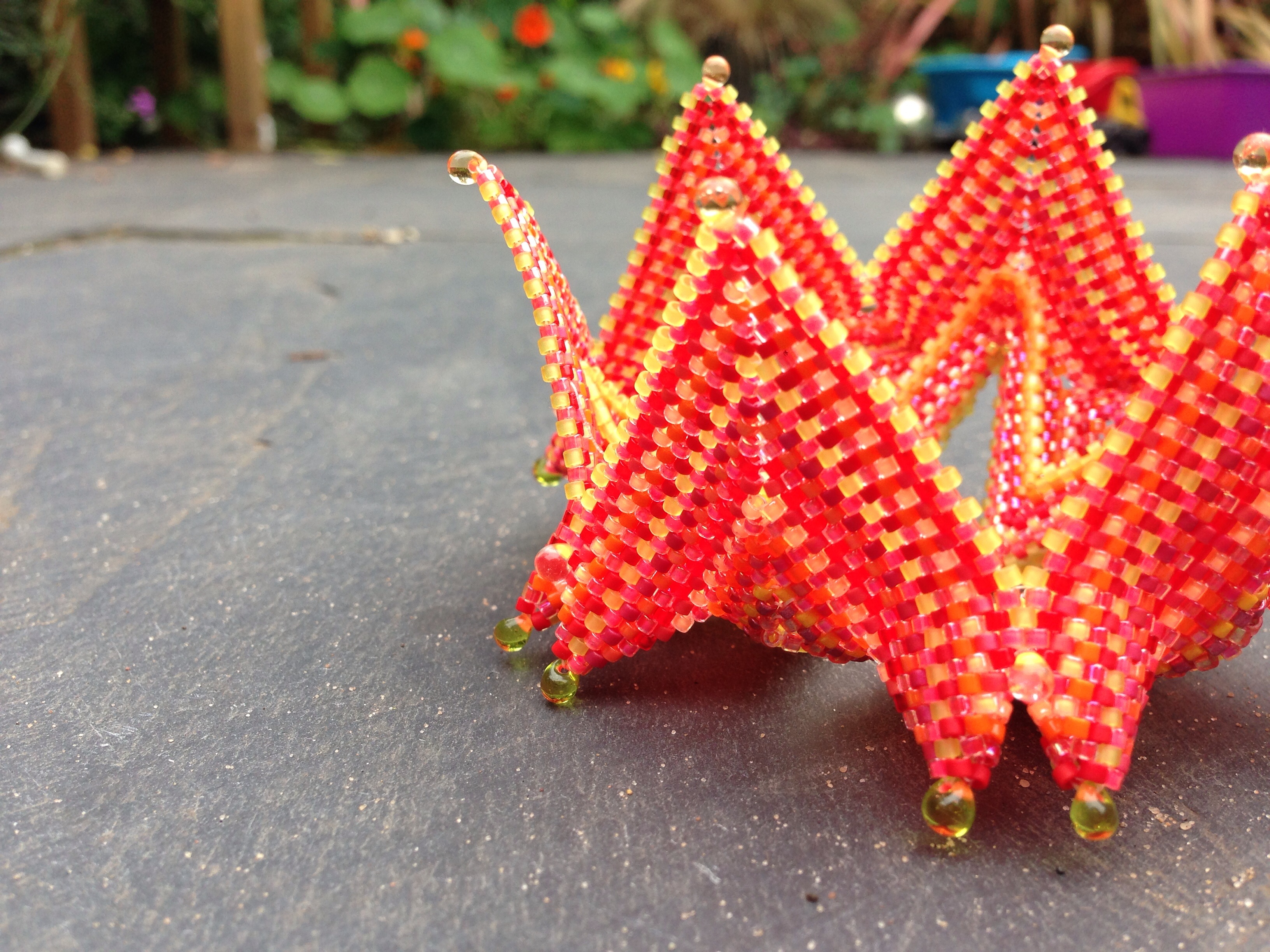
I’ve been making another Fortuneteller, but this time with size 10 delicas.  I used my previous one as a template, measuring the various distances as I beaded along and at first it went well.  However, as it grew it became clear that the bigger beads meant that the thickness of the MRAW band made the inner layer significantly smaller than the original, and finishing the joins between the small horns was definitely going to make it unwearable by me at least.  So rather than hoping for a tiny handed customer, or giving it to one of the boys (boy 2 is very keen on bangles) I’ve made it into a rather splendid bowl and I like it.  Which is just as well…………

image


Recipe

  • Size 10 delicas in three shades of red, one orange and silver, 26g in total.
  • Size 3.4 drop beads.

Tips

  • Unless you actually want to make a bowl, I’d suggest a starter MRAW band which contains six repeated ‘Vs’ with 9 units on each side of the V (not the 8 units I used).
  • To get the colour effect I used, start the MRAW band with the silver, using one of the reds as the fill bead.  Add a drop bead as one of the inner beads on any increases or decreases (you may want to miss them on the decreases – I chose to leave them in as I like the look of the drop nestling in the V.  Then change red/orange every row.  As you approach the horns, start adding the odd silver in, then more each row until you are just using silver.  I chose a random pattern, mirrored on each pair of horns, but kept it identical for each round so that the graduation was even across all the horns.  Then gently fade the reds back in, and finally as you approach the final tips work the silver back in again.
  • Size 10 delicas are still quite hard to get hold of in the UK.  Stitch n Craft are expanding their range gradually, and as usual offer probably the most competitive pricing (assuming you spend enough to qualify for free postage, which I never fail to do), although their colour range is still quite limited.  Charisma have a good range of colours, as do Fine Lines.
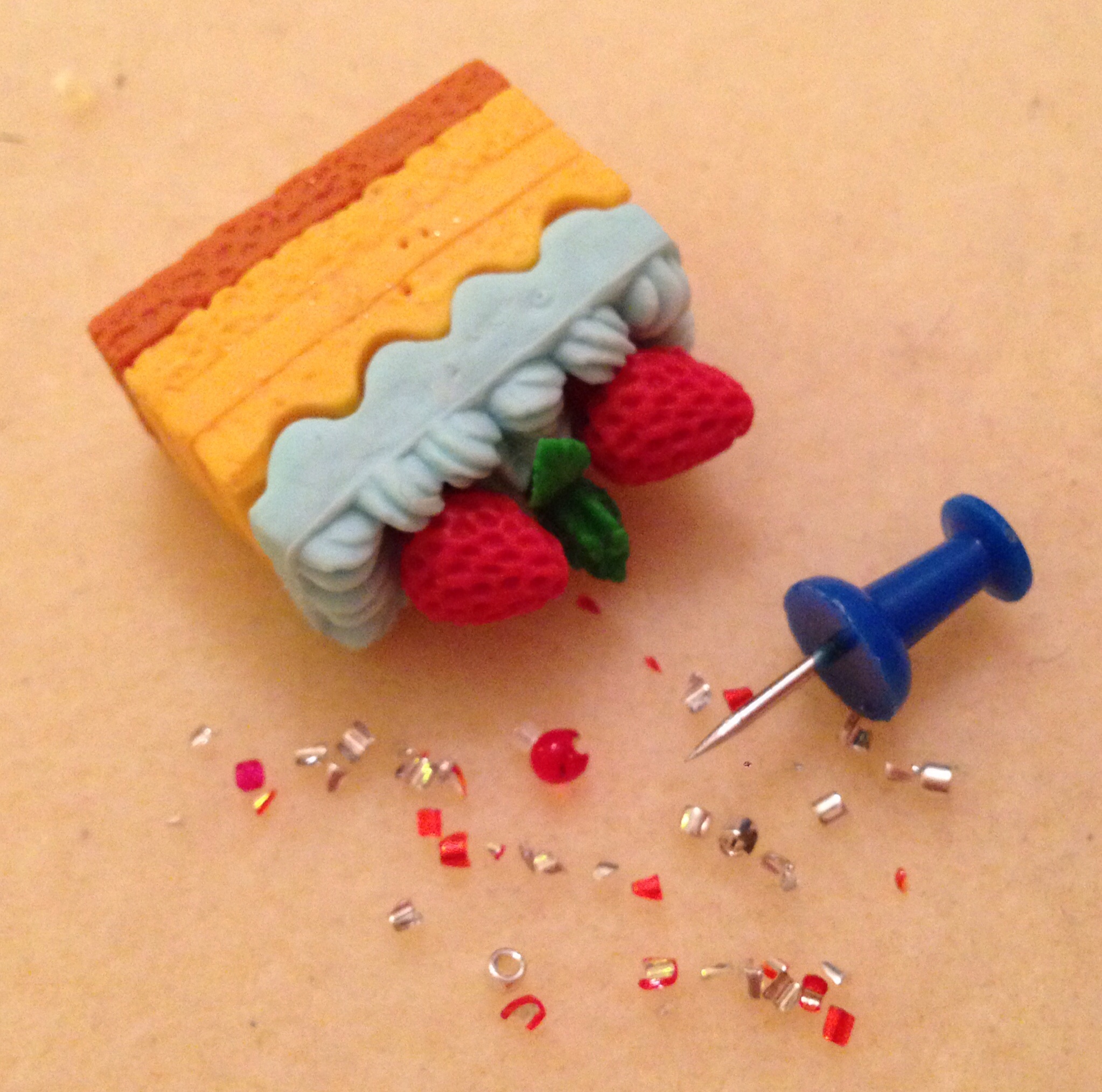
  • Finally, with this kind of work, especially with larger beads, you really can’t make any mistakes as they will be very obvious on the finished piece.  I made quite a few as I was very tired, and the lovely push pin and eraser combo I was sent by the lovely Jean Power with my copy of Geometric Beadwork 1 was worked quite hard.  I can’t remember having to break out this many beads for ages.

image

Other than my general incompetence it worked really well with the size 10s, and in many ways it’s the best use of these for geometric beadwork that I’ve tried before.  I will have a go at an actual bangle once I’ve got all the other things on my beading list moving along.

Kissing Piggies

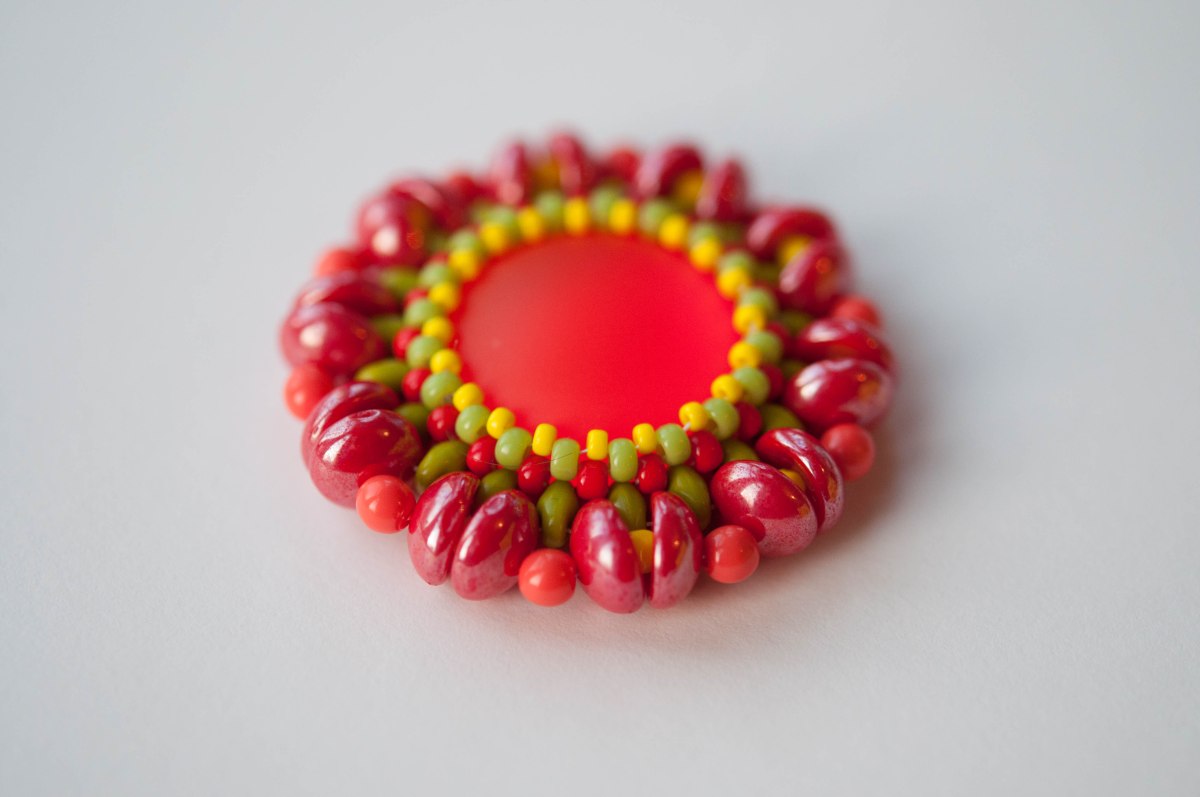
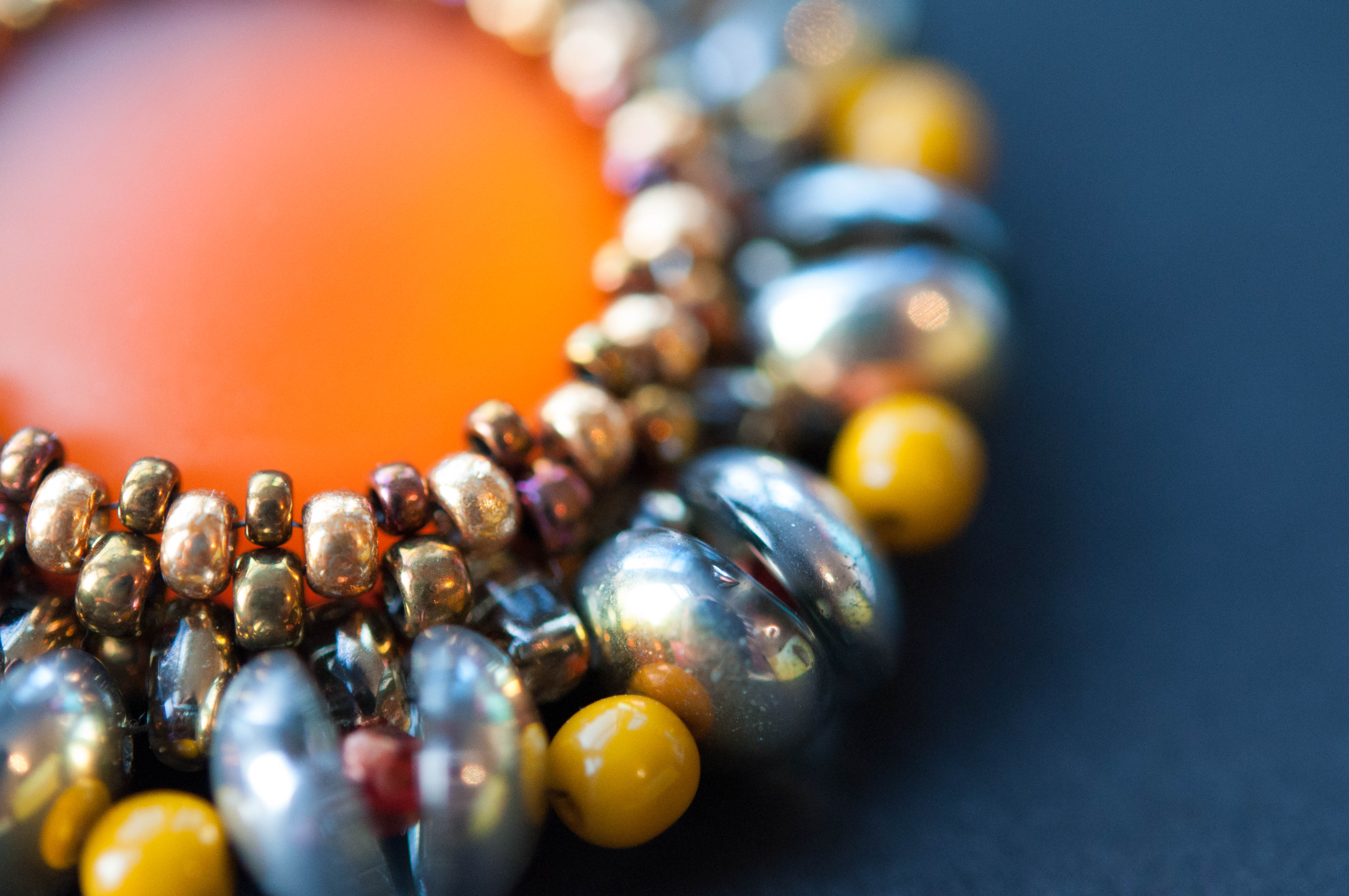
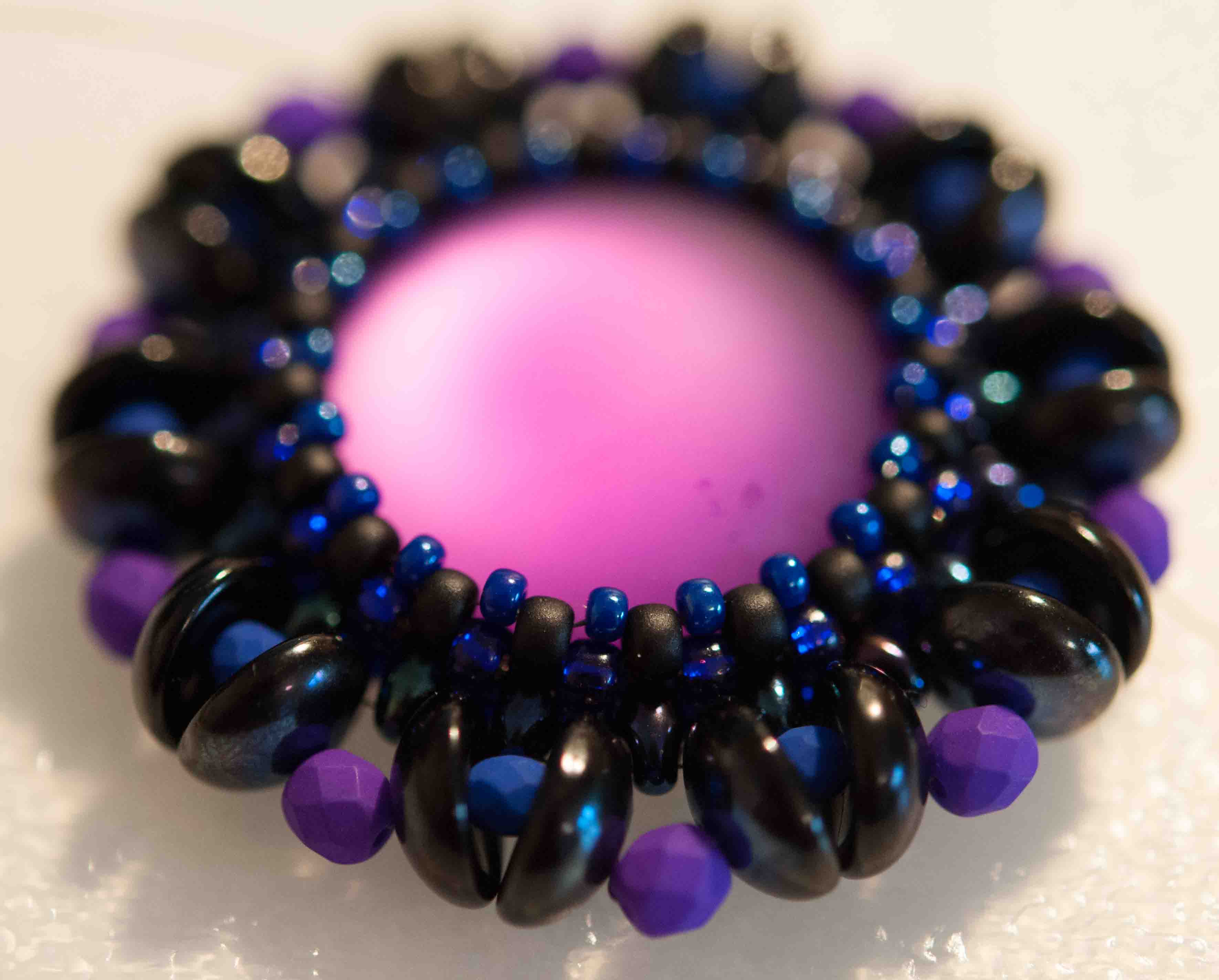
The boys have a picture book filled with photos of pigs.  Piggies sleeping, piggies leaping, piggies guzzling, piggies nuzzling, and piggies kissing.  So when I finished my new bezel, which surrounds a luna soft cabochon with facing pairs of two hole ‘Piggy’ beads, no other name would do.  The bezel came about because at the last Big Bead Show I found myself ambling around with nothing to buy – it’s more of a stringer’s fair than a beadweavers, and although there are some great teeny bead suppliers in between the big bead stands, I wasn’t really seeing anything new.  So I started looking at all of the new bead shapes which I had hitherto resisted – the two holes, the funny dragon scales, rullas & pellets, and I picked up a pack or two of each, (discovering along the way a new supplier, The Old Bicycle Shop, who I can heartily recommend for their interesting selection, £1 postage and quick delivery).  Then they sat in my stash for a few months whilst I dealt with going back to work, Christmas, and sickly children.

Kissing Piggies - Copper - Sarah Cryer Beadwork
Kissing Piggies – Copper – Sarah Cryer Beadwork

Finally a couple of weeks ago I dug out the piggies, some superduos and a lunasoft cab and made myself keep trying until I came up with a decent design.  I’m pleased with the finished design, it’s nice and simple and should be suitable for beginners who’ve tried a bit of RAW and peyote and have tension sorted.  That said, it took a fair few attempts and a good many failures to get to something that would work as a tutorial (or work at all), so banning myself from doing anything else until I had mastered it was definitely necessary!  I had the picture in my mind of the snuggling pairs from the beginning, so started from the outside and worked in – I can safely say that this does not work as a method, it was only once I gave up on that and designed a bezel that would have space for the piggies that things came together (although arguably without trying the outside in approach first I wouldn’t have known how much space to allow…..)

Eventually with the help of an MRAW starter (thank you again Contemporary Geometric Beadwork beaders – Jenny Sangster explains it very nicely on her blog)I mastered it, and it’s finished, written up & checked.  As usual I’ve stuck with diagrams rather than just photos (as I find it’s worth the time to draw the diagrams to ensure that everything is absolutely clear, and it helps me check my placements and thread paths as I draw them), and every step is also written out.

Kissing Piggies - Jet Azurro - Sarah Cryer Beadwork
Kissing Piggies – Jet Azurro – Sarah Cryer Beadwork

So anyhow, it’s available now as a tutorial – instant download from PayHip & Etsy, and e-mailed from Folksy, all at £6.  And in a fit of extraordinary organisation, I even have materials packs ready to rock and roll from Folksy and Etsy at £10 (UK only, sorry but I can’t get to the Post Office for overseas posting at the moment, and I think you’d find it uneconomic for a £10 pack anyway).  It beads up in around an hour, and uses nothing smaller than an 11 (and only three rows of them) so nice and relaxing.  Stick Sewing Bee on the telly and get beading!

Kissing Piggies - Sarah Cryer Beadwork
Kissing Piggies – Sarah Cryer Beadwork

Sparkly mistakes

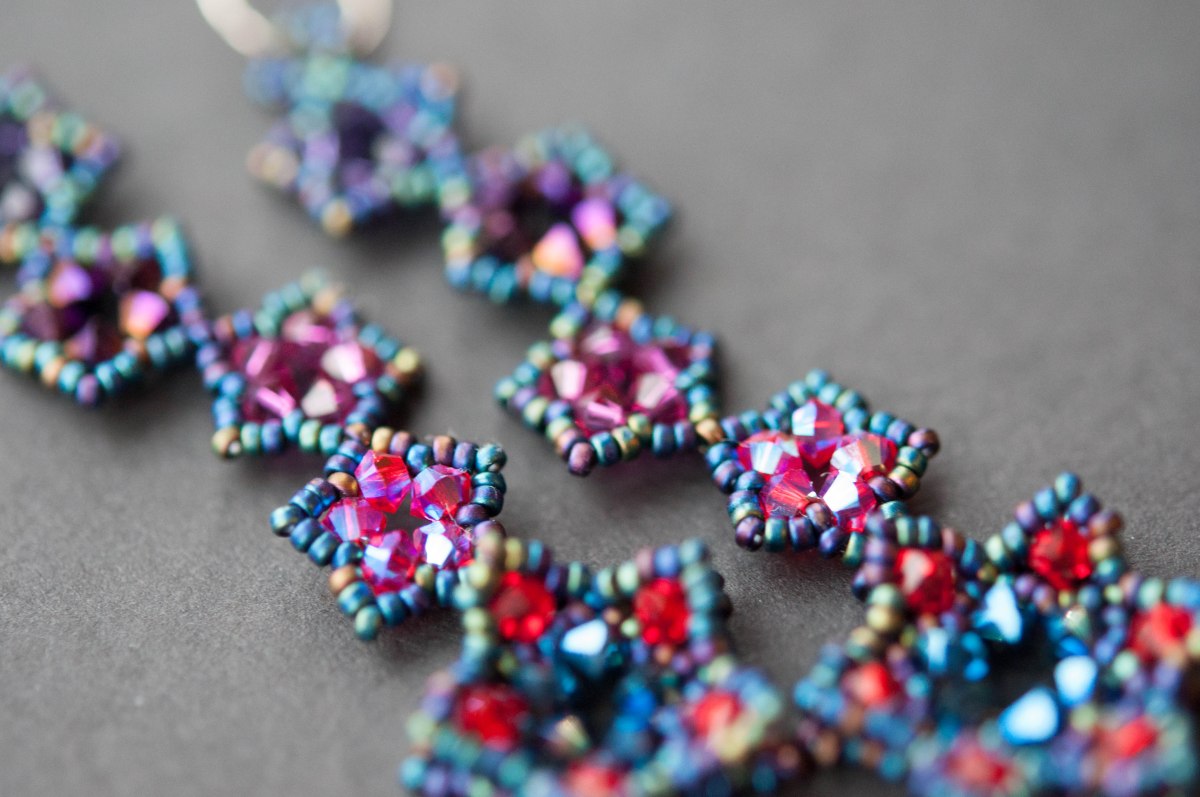
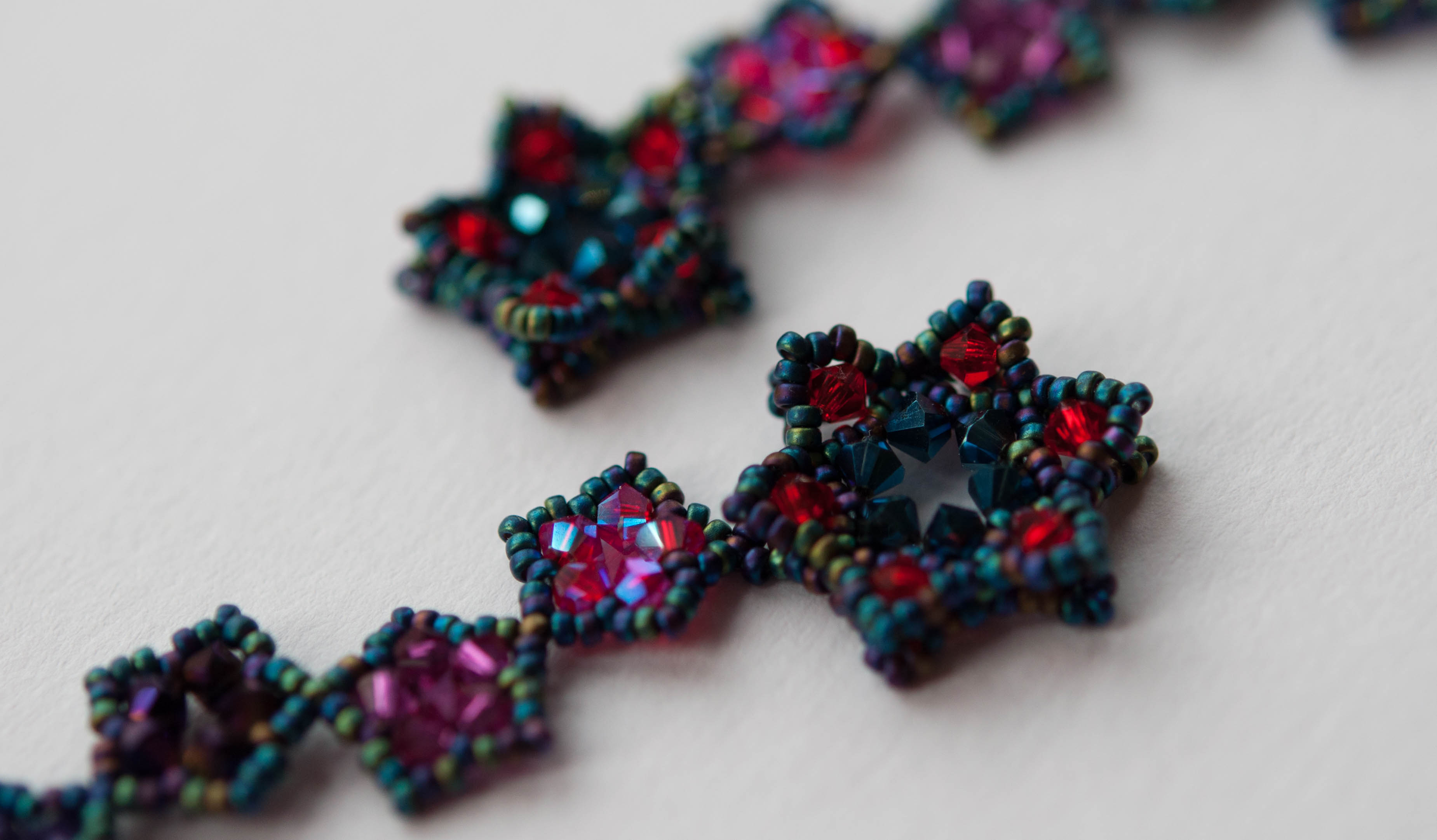
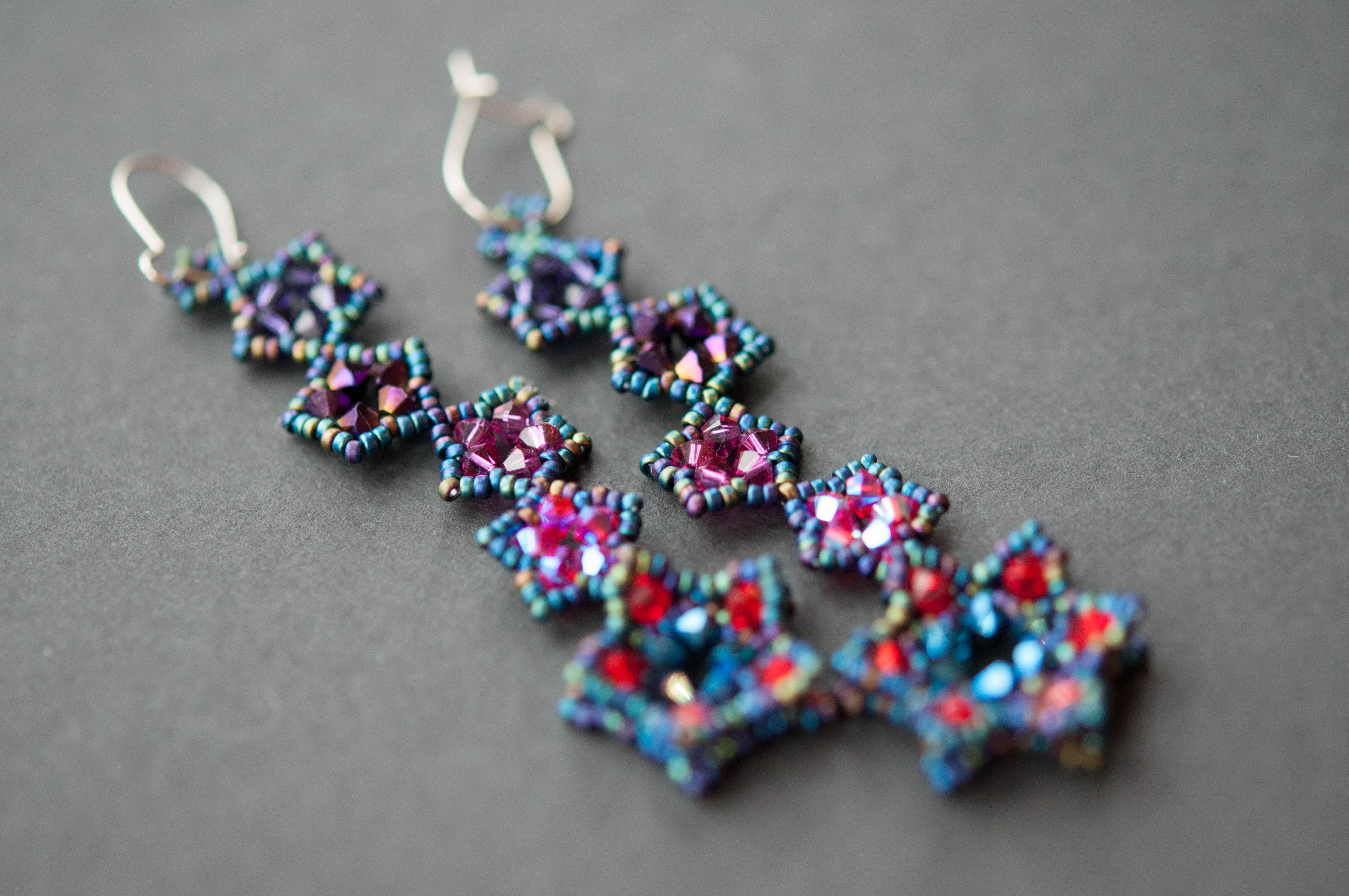
Before Christmas I beaded another project from Beadwork Evolution – ‘Stars We Are’ earrings. I wore them a couple of times (sadly dangly earrings don’t get worn much when there is a toddler in the house), but it was only when I laid them out to photograph them at the weekend that I realised I’d messed up!

DSC_0737

Have you spotted it? To give you a clue it’s my old problem with hexagons versus pentagons…….

So I am pleased to report that this design can be adapted to form a five sided star at the base rather than six. Ideally though one should adapt both earrings, not just one!

DSC_0252

Recipe

  • Sabine Lippert’s Bead Evolution p102
  • Swarovski 3mm bicones in Light Siam; Fuchsia AB, Fuschia & Violet, Bonarski Bicones in Purple Metallic & Blue Metallic
  • Miyuki size 15 seeds in Black AB matte 401FR

DSC_0246

Tips

  • Sabine uses two colours of crystals.  I couldn’t choose just two, so I used six and ran from red with a contrasting centre of metallic blue, through pink to purple.  I like hers, and I like mine too.
  • Pay attention – the way the stars are joined and constructed is very elegant in it’s simplicity, but it took a few repeats to get the hang of it as it is not obvious.  And clearly check how many repeats you have put in each unit……..

Verdict

Really lovely, nice to make and fabulous to wear.  It took under an hour per earring, probably less for a second go, so I’m definitely going to make again in some other colours.  I’ve got some lovely opaque bicones which might make a less blingy version for the daytime as well.


Bubblelicious

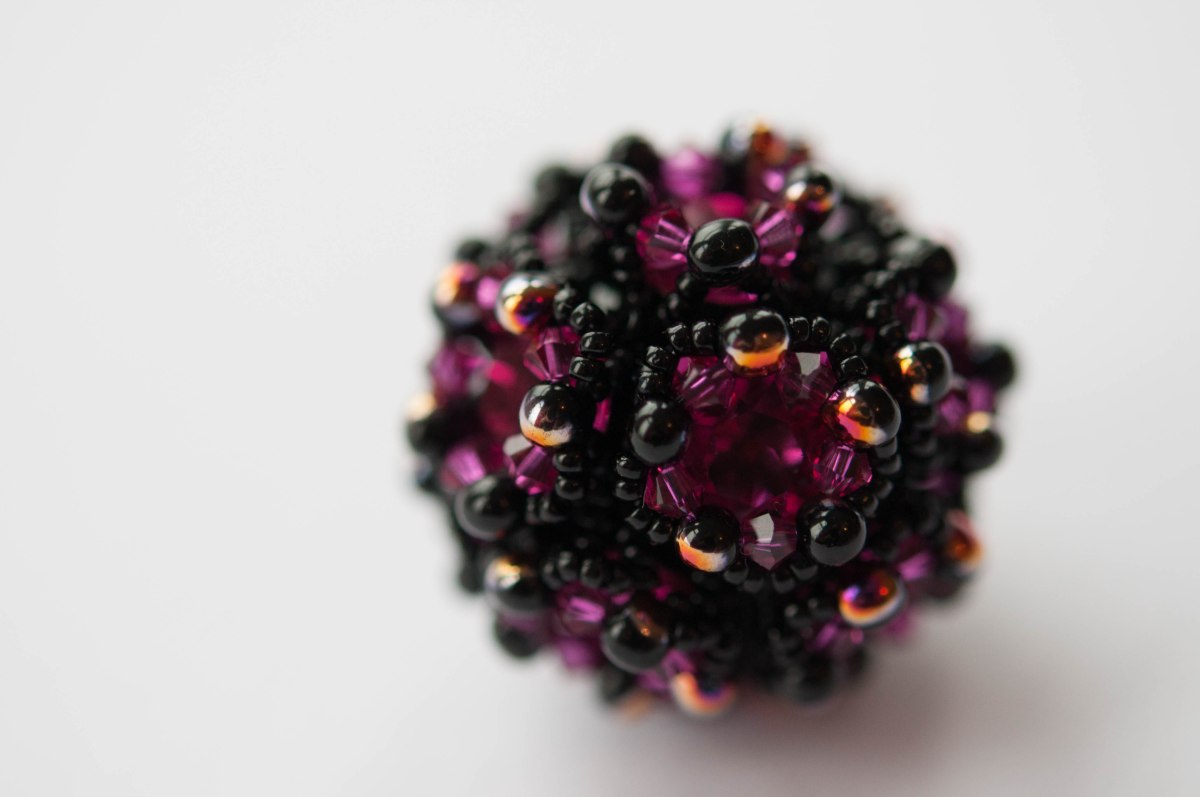
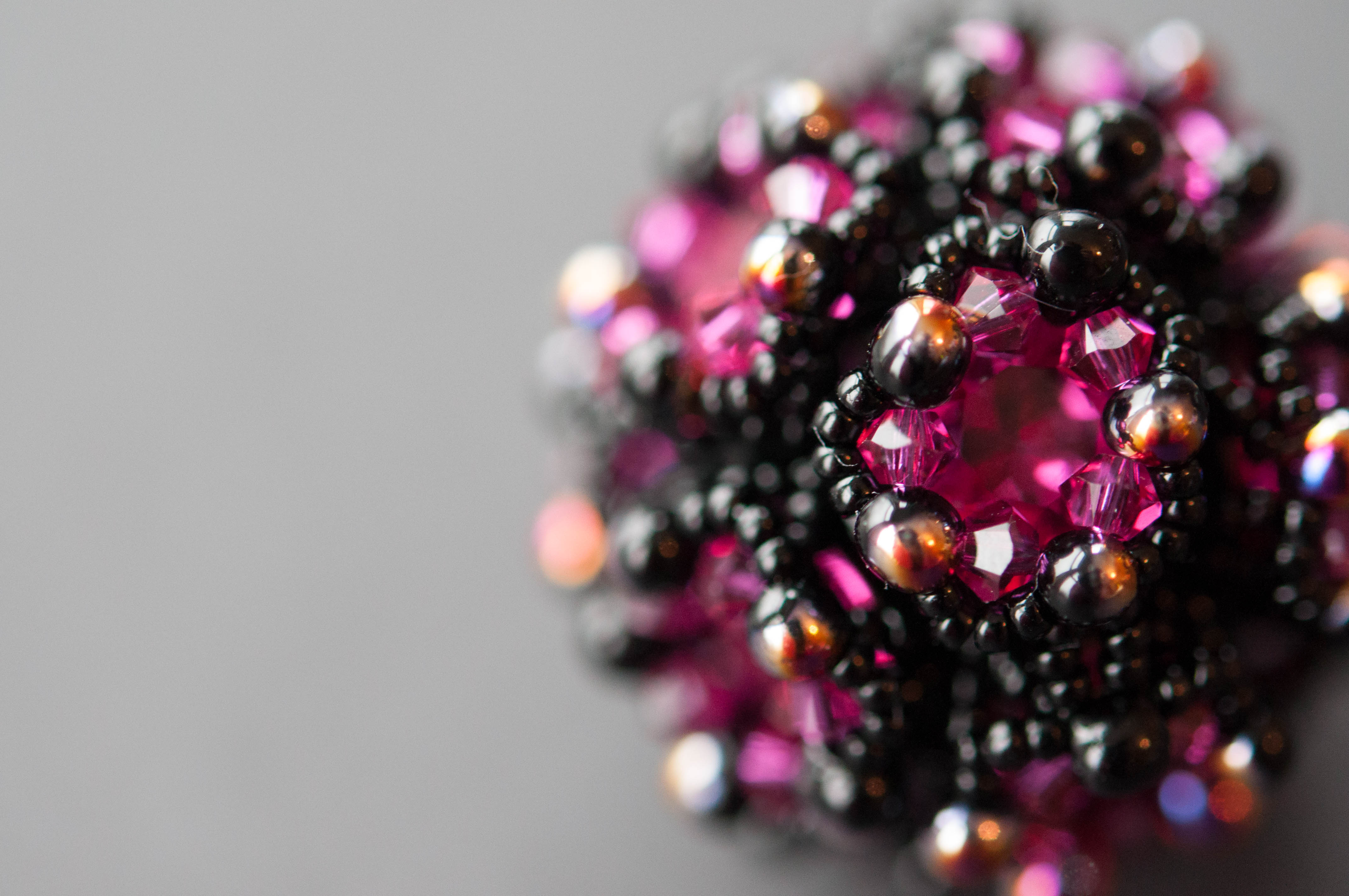
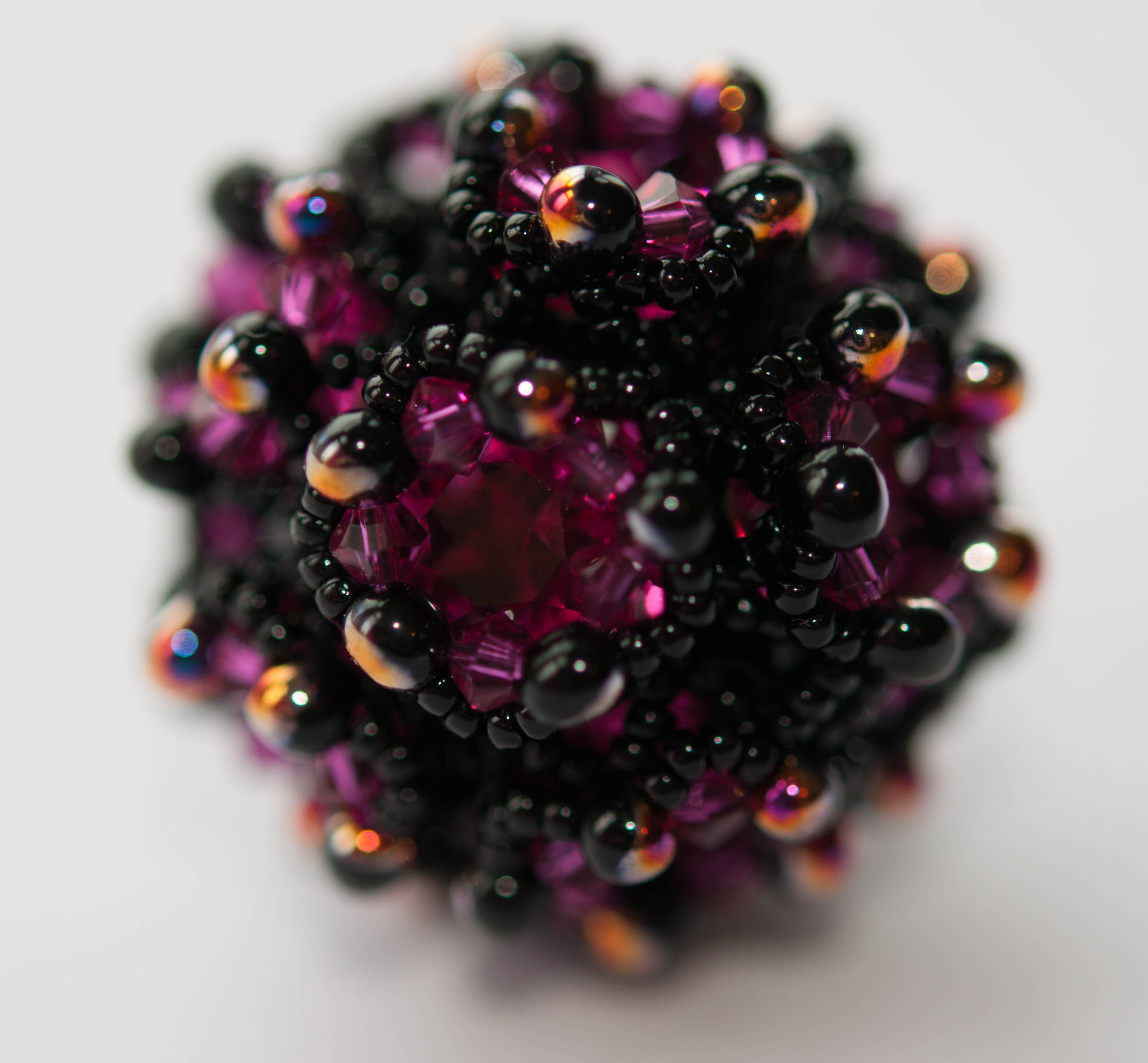
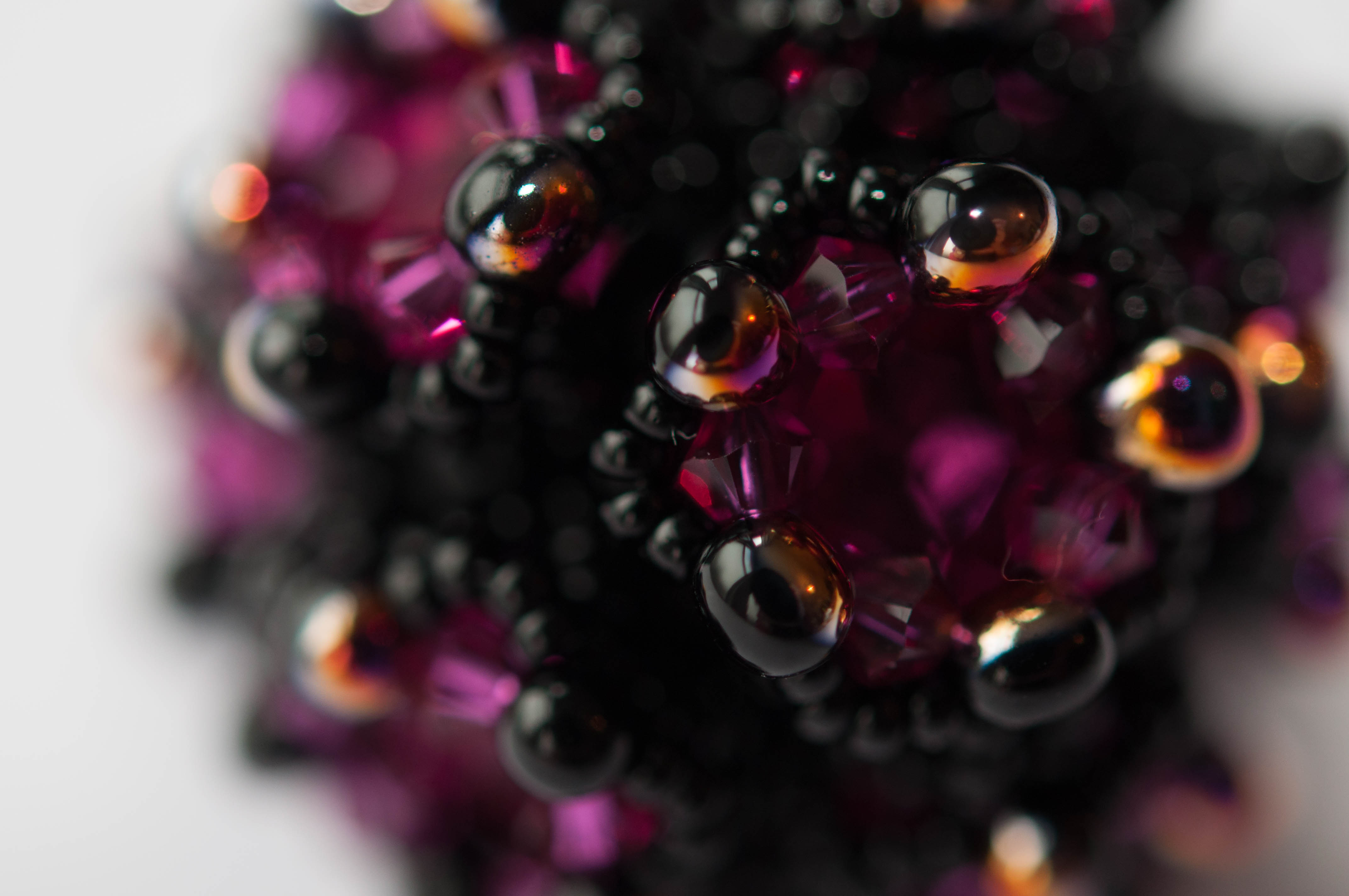
When I started this blog I made a few rules for myself.  One of them was to try to use photos taken on my phone, so that I was just capturing the work I’d done without having to set up for ‘proper’ photography.  In my shops  all the photos have been taken ‘properly’ as I think it’s important for customers to get the best possible reproduction of what they are buying, and I want to be able to show levels of detail only possible with a macro lens.  When I take the ‘proper’ photos I use our digital SLR, macro lens and big sheets of white or black mounting board propped up in our front room window – the translucent window film which stops the neighbours seeing the mess inside gives a lovely diffuse natural light.  For the blog I want more spontaneity, and definitely don’t want to wait weeks for that elusive couple of hours with no little people.  When I take photos for the blog or Facebook it’s usually with my iPhone, against whatever plain background I can find and with the closest to natural light I can get – I’m after speed rather than fabulous quality, but so far I’ve been really impressed with the photos I’ve taken.  Last year I particularly enjoyed being able to shoot my Fortuneteller on the lovely slate tiles in our back garden,  with nasturtiums behind. However, in the depths of winter, I’ve really struggled – so although I finished my Bubble Ball before the New Year, I’ve only now had the time to get the big camera out and take some pictures for you.

DSC_0231

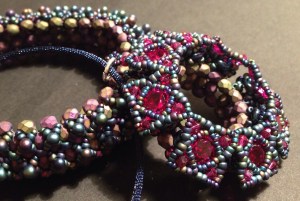
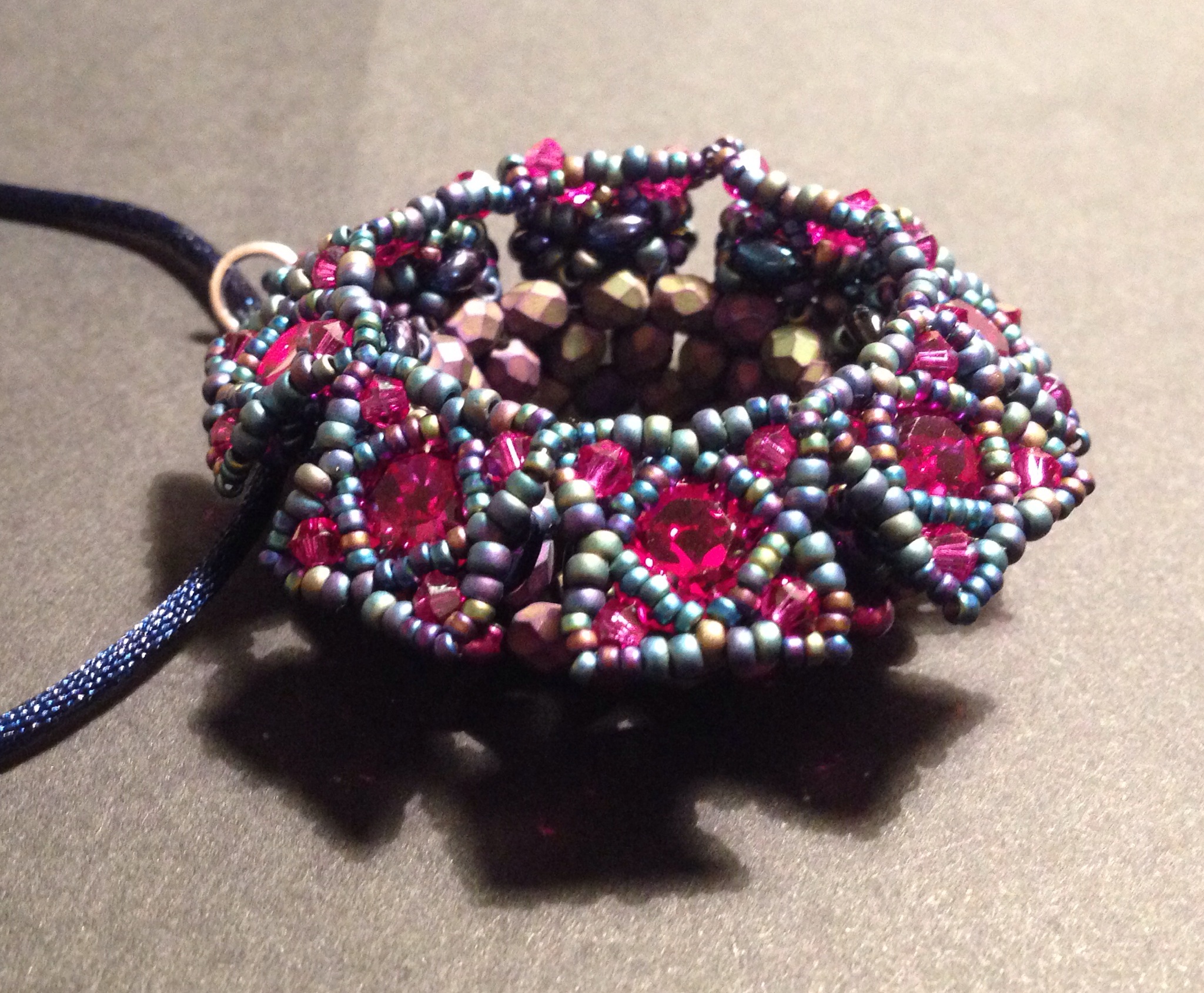
The Bubble is another piece from Sabine Lippert’s new book ‘Beadwork Evolution’ and it was the piece I wanted to make the most when the book arrived.  I only had the twelve chatons required in a couple of colours, and although I thought I had lots of drops, only one set matched, so I’ve ended up with a combination which makes the finished ball look quite different to Sabine’s.  Black, though versatile isn’t a favourite colour for beading, and it is tricky to photograph.  That said, I still love it, and the drops I used are just stunning and I think they really make the piece even though it’s not as bubbly as Sabine’s.

Recipe

  • Sabine Lippert’s Beadwork Evolution – page 133
  • Chatons & Bicones – Swarovski Fuchsia
  • Drops – Hybrid Jet Sliperit – from Beads of Bohemia via Etsy
  • Seeds – Black Miyuki
  • Fire polished – Black Czech

DSC_0750

Tips & Lessons learnt

  • Watch your tension – as usual with Sabine’s stuff you need to stay nice and loose.  Which is the opposite of my normal tension……….
  • It does turn into a bit of a needle bender towards the end so be prepared with a good light and some tweezers.  And perhaps don’t use your very best needles?
  • I kept forgetting to do step 4 again and again. Don’t do that.
  • Whilst the sliperit drops are incredible, I paired them with black beads as that seemed best.  And I normally avoid black beads like the plague – they hurt your eyes and a pig to photograph.  They also mean that a lot of the detail of the construction is lost and I think that’s a shame.
  • Because I couldn’t tell how much the Fire Polished beads in the core would be seen I opted for black there as well, and although the finished piece is very wearable it might pop a bit better with some contrast – perhaps a copper core or even perhaps a black core with copper seeds?
  • Sabine again matches the chaton and crystal colours – I think that works really well, but would like to see what happens to the shapes with an alternative (particularly if I used a lighter chaton colour than the crystals).
  • It took me about four hours to finish (including a lot of colour faffing) – I’d expect to be quicker next time, so would fit into a few evenings nicely.
  • For my next version Stitch N Craft have some of the drops in Crystal Sliperit, and as I also have some Piggy Beads in the same colour waiting to be used I think I might get some for another version, as the crystal will be more ‘bubbly’.  Not sure what colour chaton to use with them though, so can’t quite work through all the beads needed…….
  • Or I ought to really try it with the translucent drops Sabine used – I’ve done an order since I made this so I have some more ‘bubbly’ ones in my stash now.
  • Either way this seems to be very much like a design I’ll make lots of versions of, so you’ll be seeing it again soon!

DSC_0754

Tiles on a Ring Pendant

Well the book arrived two days ago and I got stuck straight in. Luckily I have a good stock of chatons, because this book is going to munch them up. For choice I would have made the Bubble Ball Pendant first because it’s my favourite, but I had the right beads for Tiles on a Ring so I dived in. It went together beautifully – Sabine’s designs are always so simple, whilst looking amazingly flamboyant. Around three hours in total, so an excellent weekend project.  It uses a RAW base with a 3D netted embellishment to form the cups and frames for the chatons, and I’d say it’s suitable for intermediates.

IMG_2256.JPG

Recipe

Sabine Lippert’s Beadwork Evolution p99
Seeds in 401FR Matte Black AB 11 and 15
Matte purple iris fire polished
Fuschia Swarovski bicones and chatons

IMG_2253.JPG

Tips
I got the colours wrong – the fire polished beads are too different in colours from the seeds, and because the seeds and the firepolisheds are next to each other rather than used together it makes the firepolished ring look a bit disconnected. A shiny finish might have worked, or blue iris to match the seeds. This is a shame as I’d chosen the combination to go with the Baroque Dimensional Bracelet I made a while back.

Use the same colour of bicones and chatons – that will give you lovely squares of bling, and you’ll loose those squares if you don’t match them.

As with all of Sabine’s pieces a relaxed tension really helps – I have to make the effort to remember this one!


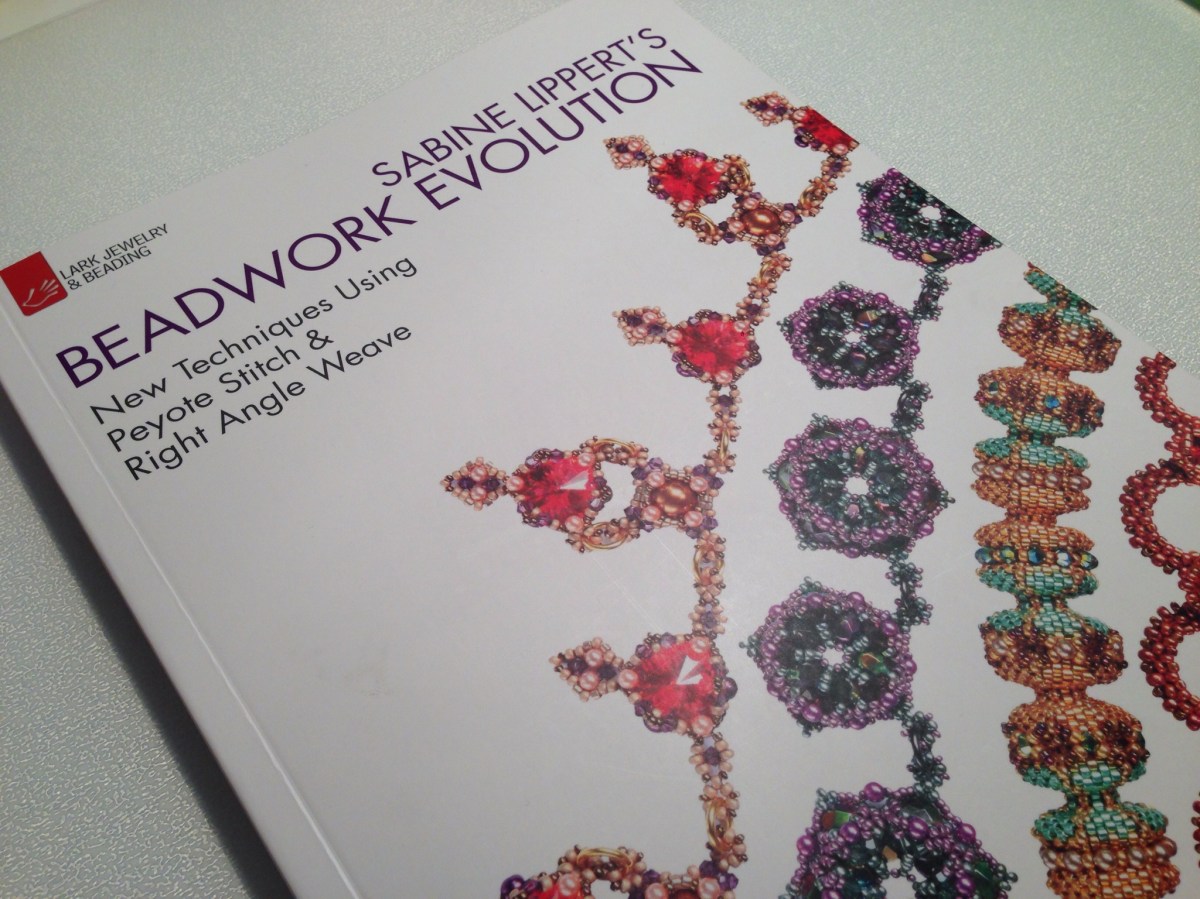
Beadwork Evolution – Sabine Lippert

At last it has arrived after a frustrating wait …….. And it’s fab! Some very Sabine stuff, and some slightly different stuff so a good mix.  Cue a happy evening looking through my stash and choosing what to make first (interspersed with sulks when I don’t quite have the right beads). One of the 3d balls from the last chapter probably, if I have enough chatons. Watch this space.

Glue

I’m scared of glue – in beadwork it always seems to let me down. I know that just as when a wholly stitched piece fails it’s my technique that is at fault, but I still avoid it rather than learning how to use it correctly. However, I spotted some interesting clasps on Etsy which solve the age old problem of how to finish a flat beaded cuff without interrupting the simplicity of the shape, and the only way to attach my flat beadwork to them was to get out the glue. So far it has held………

IMG_2203.JPG

Recipe
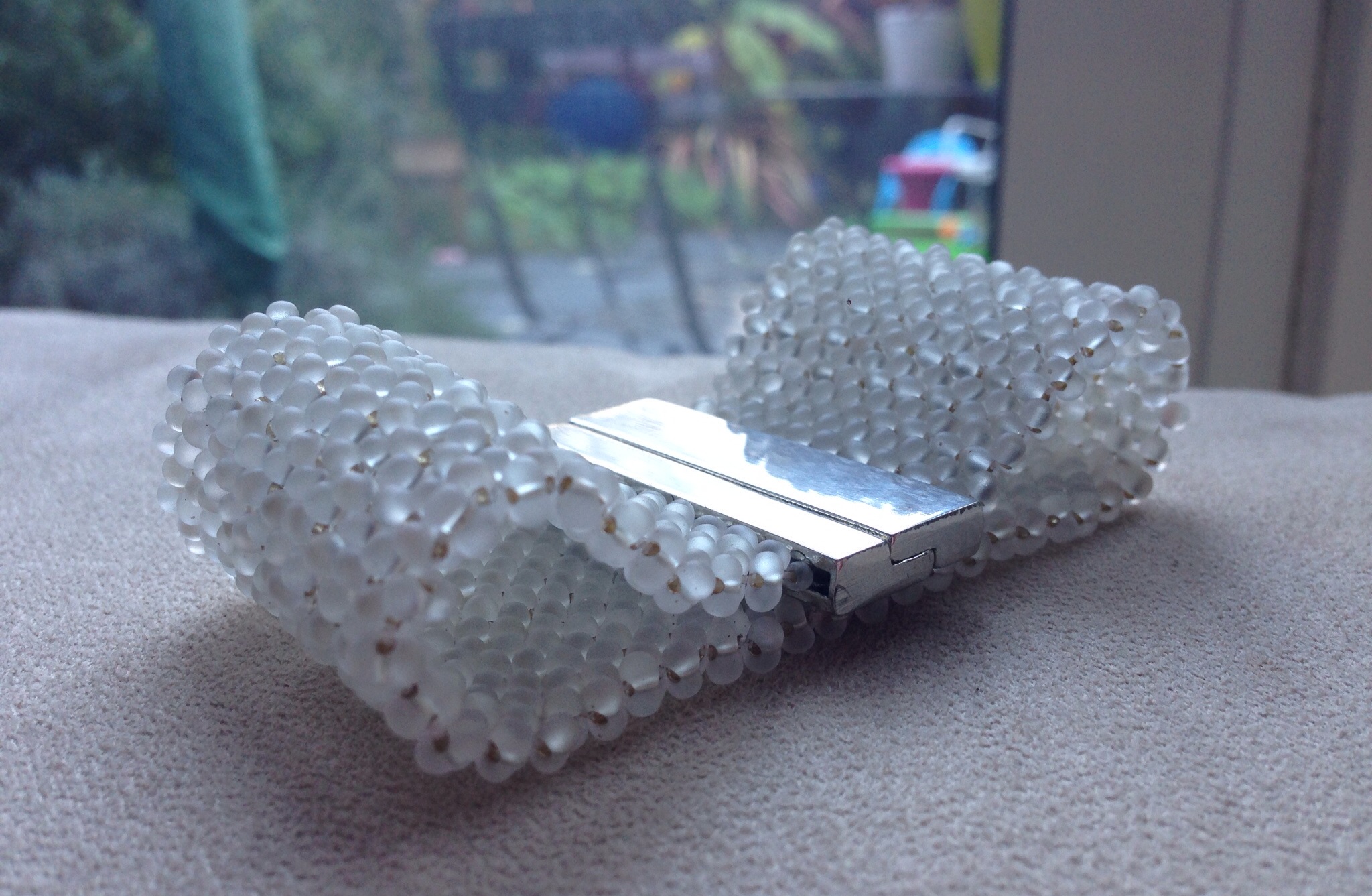
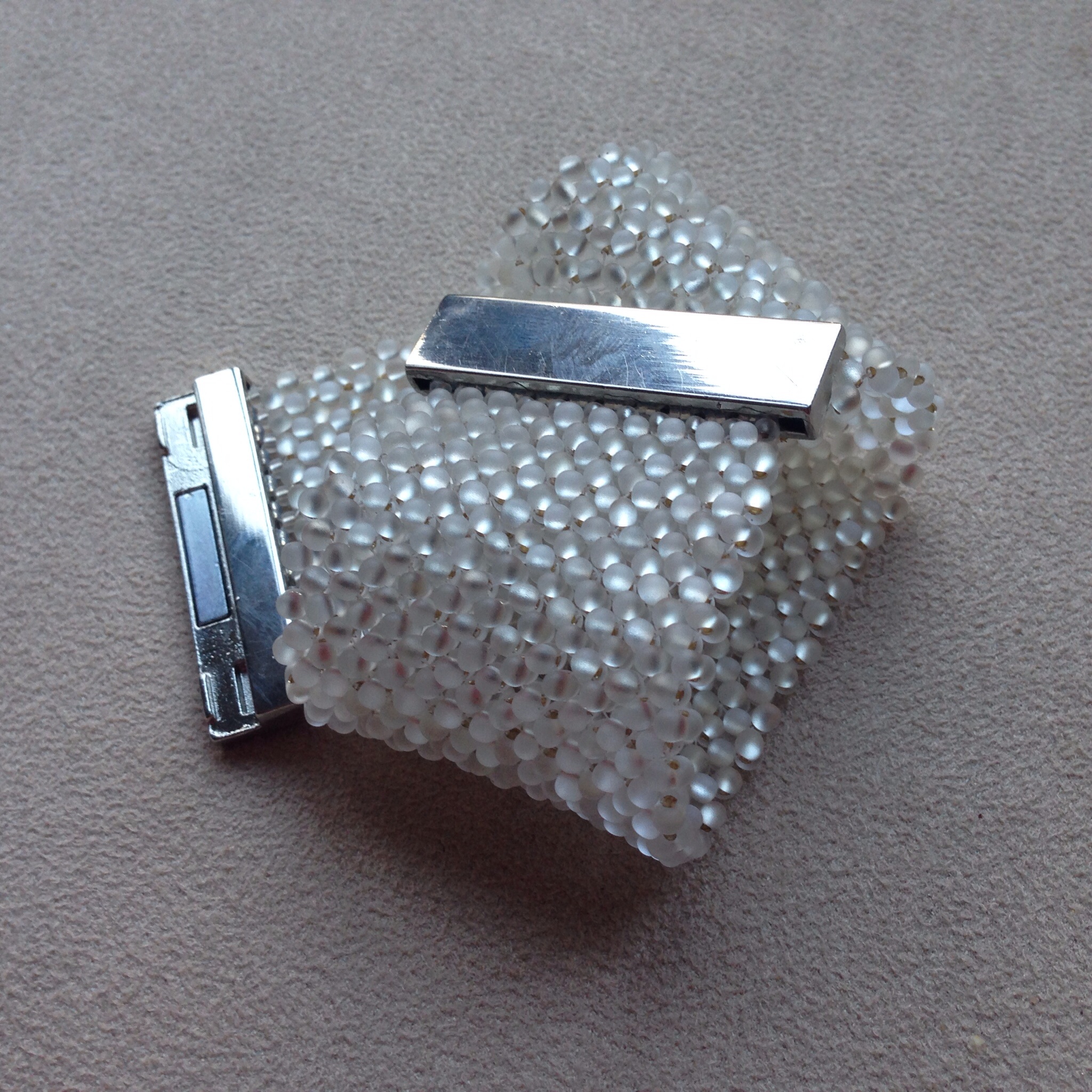
34g peanut beads in silver lined frosted crystal (Stitch N Craft)
1g size 11 seed beads in silver lined frosted crystal
Magnetic box clasp
Thread of your choice
Glue/cement of your choice

Method
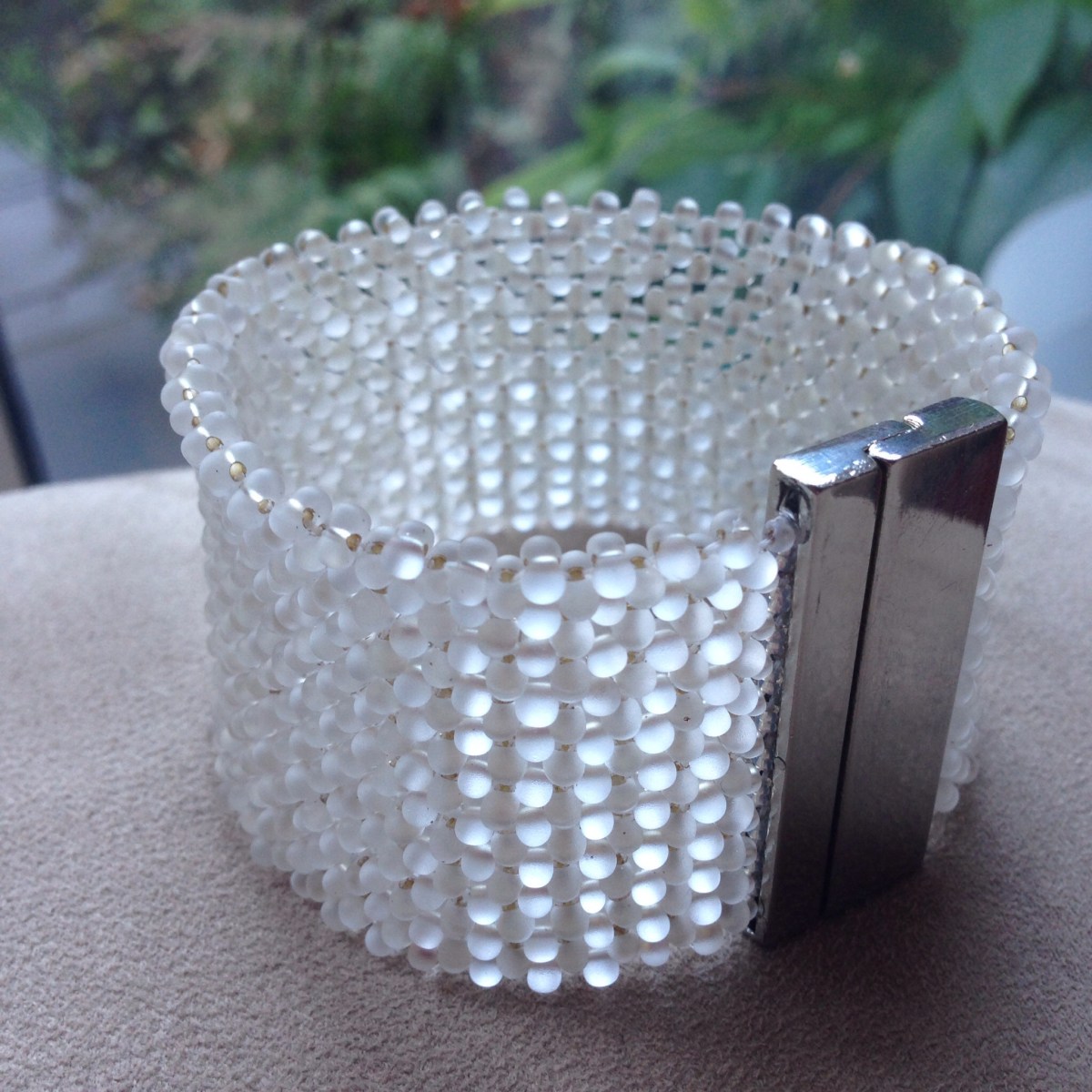
This bracelet is based on lots of pieces I’ve seen around the beading world using plain RAW and farfalles/peanut beads, so although its simplicity (flat RAW – not exactly revolutionary) means I did strictly speaking manage to design it myself, the credit for the concept belongs to others – so if you want a proper pattern head over to Etsy and look at Shelley Nybajke‘s splendid downloads using some bigger lovely etched beads. I bet she isn’t scared of glue.  Aurelio Castano has also done some lovely things with similar clasps, and Beading Daily blogged about both of  their work (which is what made me order the clasps in the first place).

Anyway, it consists of 43 rows of RAW 10 units wide using the farfalles.  Then to create a tab to glue into the clasp I sized down using 11s and then did a row or two using pairs of 15s (have a play to see what will fit into your clasp).

image

Tips
Use a double length of thread – work with one half, then go back and build out in the opposite direction using the other half.
Fasten off and attach a new thread for the 11s as then if something goes wrong with the catch you won’t trash the main part of the beadwork.
Next time I’d make this wider rather than narrower than the catch – I just think it will look better.  One or possibly two more units per row.
I’d also make it a touch snugger on the wrist as it will sit better and not flap around. Two or possibly three rows less (I have a 16 cm wrist – finished length was 19.5cm and  I think 18cm would have been better).

These clasps were fine to play with, but if you have another source locally I’d go for something a little more expensive as the plating has already started to wear a little.  Also the holes on this colour (which looked like they might be useful for glue avoidance) turned out to be a bit clogged up with plating and would have trashed my thread…….

Faux cro rocks!

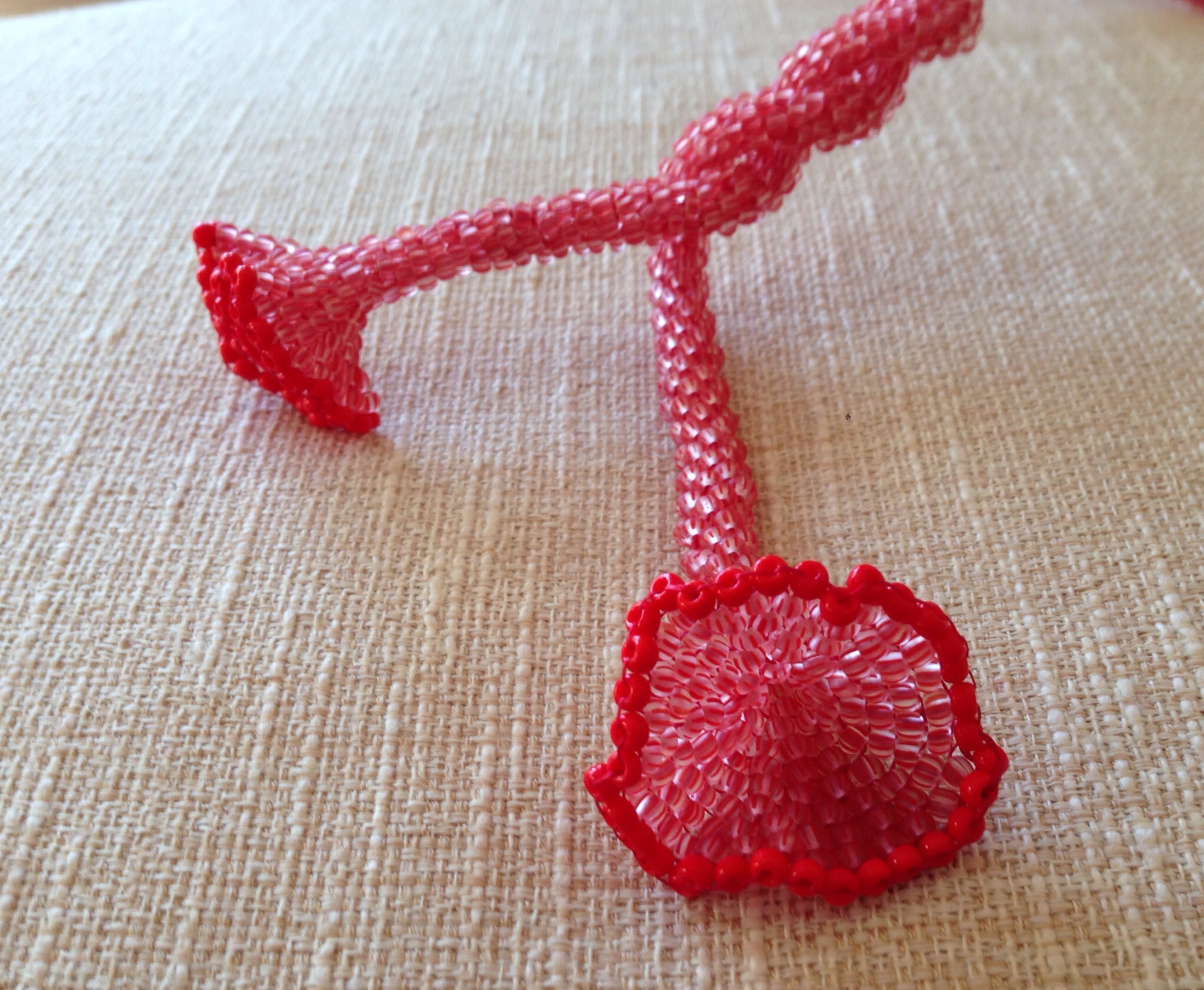
For several years I have been eying up the photos on Jean Power’s website of her ‘faux bead crochet’ bangles. Now I love the appearance of bead crochet, but I’ve had several goes at doing it which have always ended in tangles, uneven work and tears. I’m sure it’s lovely and quick once you are expert, but for me it is incredibly slow, and combined with the absolute tedium of threading all the beads on before you even start I feel it’s not for me. However it does make the most beautiful beaded ropes, so a fake version using beadweaving techniques I’m familiar with seemed worth a try. Staring at Jean’s photos repeatedly over many years sadly did not reveal her secret, and though Jean has been teaching it as a workshop I’ve never been able to go. So when her recent newsletter announced she’d released a tutorial I grabbed one straight away (the joys of instant downloads). Reading through revealed I had been a numpty, as her solution is elegantly simple, but there is much in the tutorial that I would never have worked out even after years of playing, particularly the joins, so it was well worth the money to skip the experimentation and go straight to a very refined solution. All I need now Jean is to work out how to split the rope into two or three so I can do branches please?

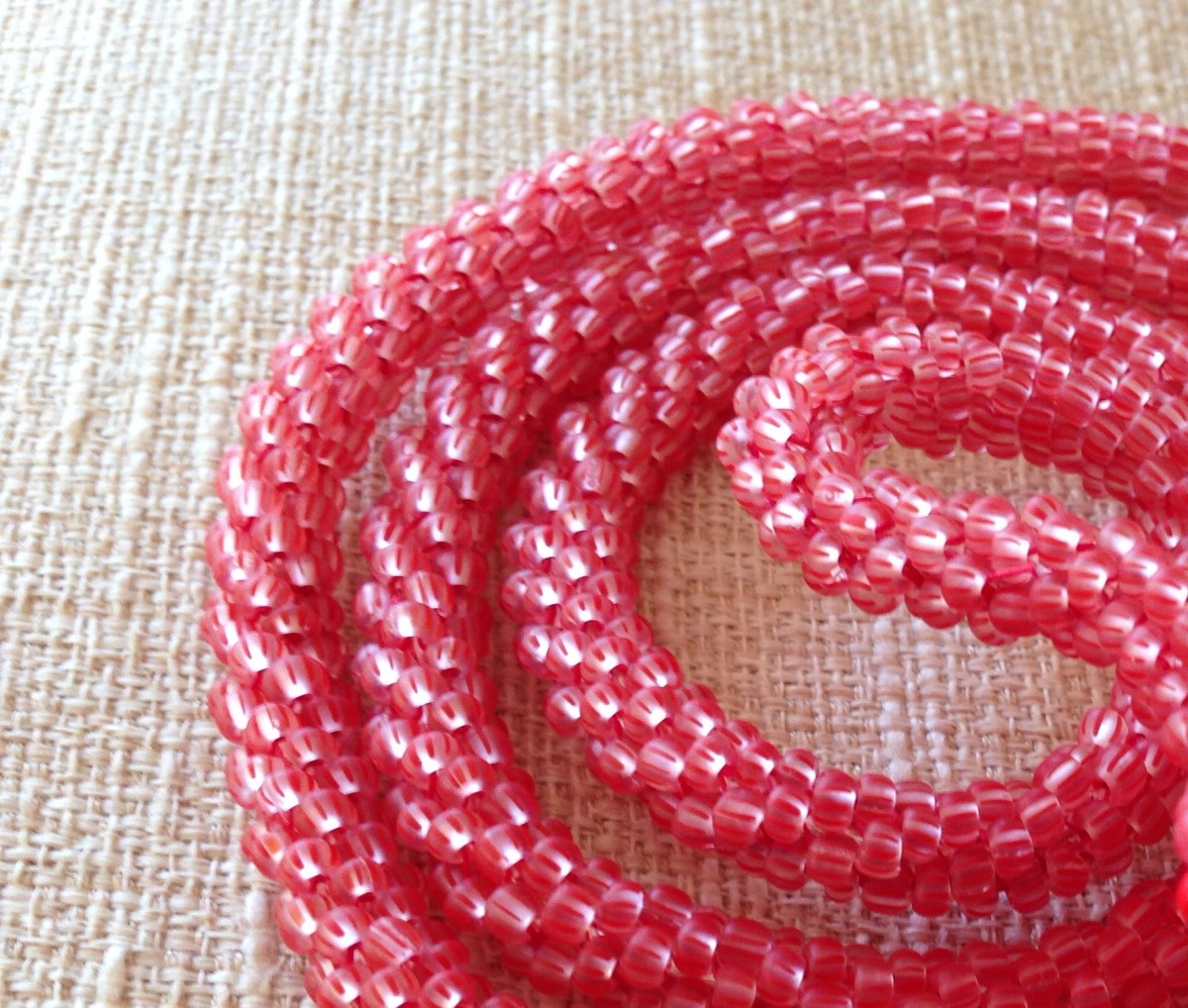
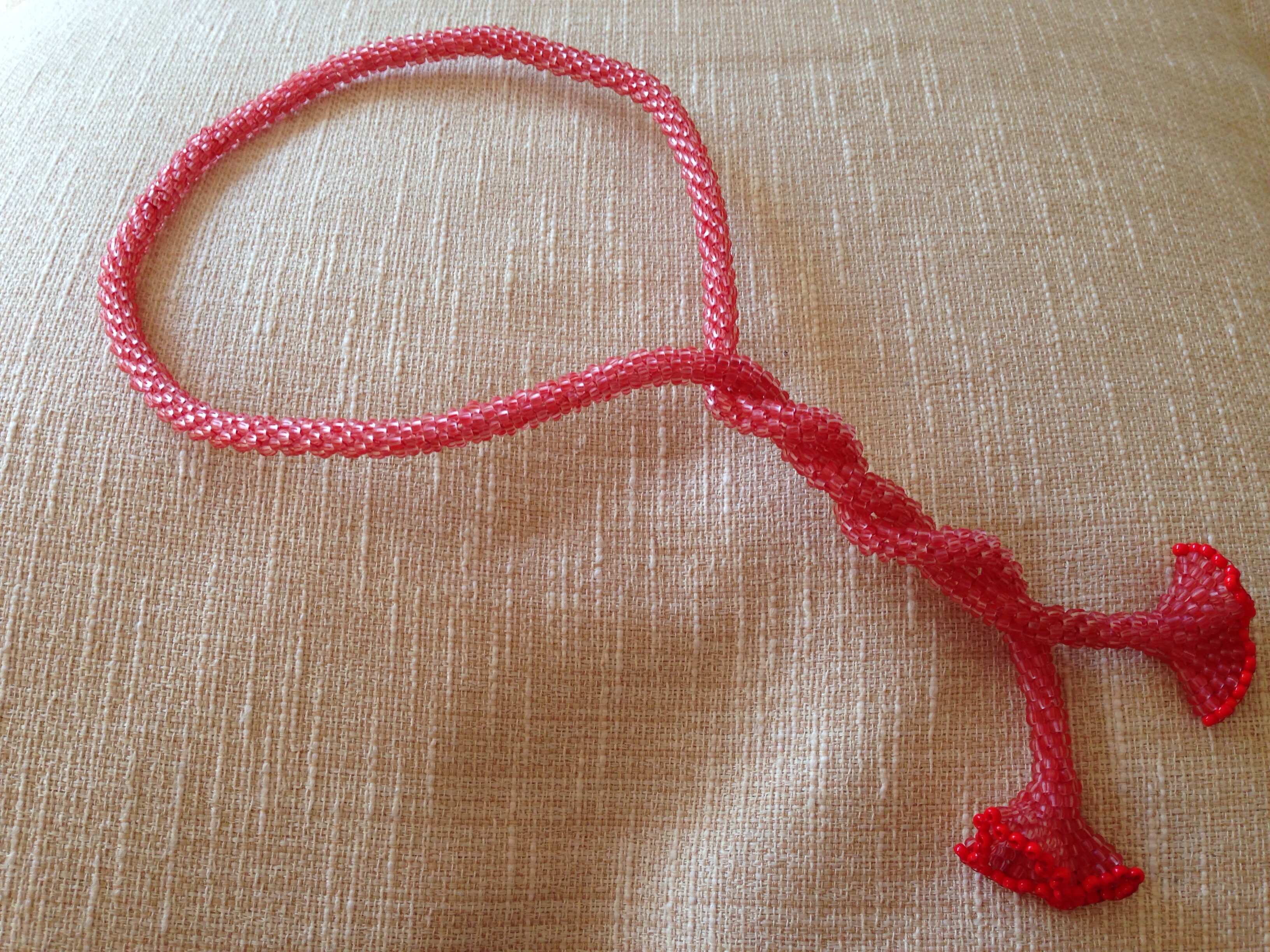
Anyway I’ve made so many bangles lately that I thought I would instead make something more like a lariat, but I ran out of beads (poor planning) so I’ve made a short rope with increases at either end to form frilly cones (a la CGB 1 although using Jean’s stitch with increases, not their technique as it didn’t really work for me).  I then threaded a wire through the middle so the piece can be sculpted into a choker, bracelet, whatever. The simplicity of the design and technique made it a very relaxing, stress busting kind of piece to make, so I think I will be using this technique again soon.

image

Recipe

  • 20g of red striped frosted crystal size 8 seed beads – mine were from Beadworks
  • 1g of opaque scarlet miyuki size 8 seed beads – 407 from the Bead Merchant
  • Red miyuki KO thread
  • 65cm 1mm silver plated wire

Tips

  • Read the instructions all the way through. Jean explains the theory as well as giving step by step instructions so you will be better equipped to improvise and add your own touches, as well as to complete the projects she details.
  • If you are not used to the basic stitch Jean uses, do a flat square sample first so you can get your technique (particularly tension) sorted.
  • Use big beads. There are some extremely beautiful bead crochet works out there using teeny weeny beads, and this technique will undoubtedly work extremely well for those, but you need to practise first. I would definitely heed Jean’s advice and start with 8s.
  • Make sure you have enough beads as this lovely speedy technique will munch them up quite quickly – 20g made a 5 around rope (probably the thinnest you can do with size 8s) 70com long.  So I’d reckon at just under 30g for a 1m rope which would make a versatile long necklace or lariat, and you should get a bangle out of the standard 6g tube of 8s.   You can always do a sample of say 10cm and then weigh it to estimate.
  • The slightly more organic appearance of crochet or faux crochet with 8s means this is a really good way to use up those beautiful but sadly wonky and uneven seed beads you bought all those years ago before you discovered the easy uniformity of Japanese beads. And you can also use the beads you bought for kumihimo but couldn’t use because the holes were too small for the bigger working thread (although you can use thicker threads for this technique and make a feature of them if you want, just like bead crochet).
  • Wiring the piece allows me to sculpt it each time I wear it – it would look very nice with the wire poking out and drops or rizos dangling from jump rings attached to a loop at the end

image

What’s next?
In theory you can use this technique for any bead crochet type piece – there are some amazing patterned ropes out there and I can’t wait to try.   Have a look at my Faux Cro Pinterest board for some ideas if you’re interested.

I’d also like to try working round a core of cord or tubing so that I can tie on and bead over some feature beads, and I will have to find some quiet time and work out how to split the rope so I can do branching designs.

Telling fortunes

I’ve had my electronic copy of Contemporary Geometric Beadwork 2 for a few weeks now, and with the bigger boy at school  at last I felt I had the time and energy to have a go at another piece. One of the loveliest pieces in book 1 was the Fortuneteller, and with lots of lovely examples in book 2 I felt inspired. It’s gone together very nicely (they really are deceptively simple designs in the end) and I’m really rather pleased with it.

image

I used a variety of shades of red, orange, salmon and peach delicas, including two of the newish luminous colours. In natural light the finished piece is very bright, but the yellow tones of artificial light do quieten it a bit.  Apologies for the failure to take photos in progress, but I don’t get much chance to get at my beads in daylight……

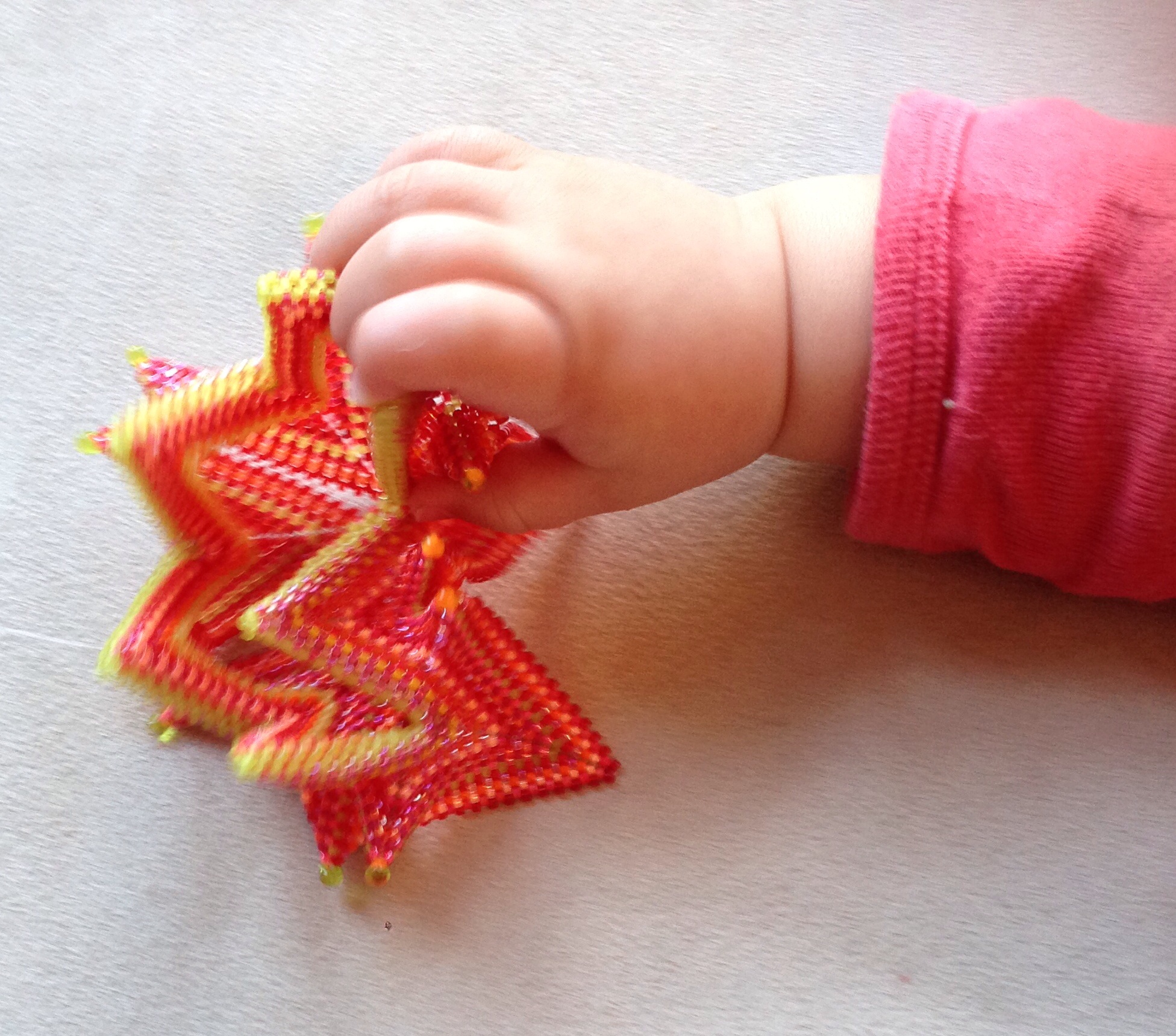
Babies and beading don't mix
Recipe
29g of delicas in around 15 different shades of salmon, red, orange, peach, yellow and pink, including luminous, mattes, metallics and transparents.  24 Miyuki drops (various colours, taken from a mix).

image

Tips & variations
I made their ‘small’ which is only just large enough. However I do expect it to stretch a bit in wear so I’d say this should be perfect. Their small is six repeats of the zigged band with 10 units on each side of the zig. My knuckles measure 21cm round.
I had a little trouble following the instructions towards the end so I ended up simply adding a drop to what I felt was roughly the right place, and zipping 3 beads only Jean Power style,  which gave about the same look, avoided making it any smaller and seems fine to me.
Next time I will vary slightly and add drops to the modified raw band (at the decreases) to match the other points.
I didn’t add drops in the final round (after zipping) as I felt the three already there were sufficient.
I used some transparent frosted lime beads for the raw band and edges. If I was making again I think an opaque bead would work better here (although I would still use transparent beads for some rows in the main fabric), or even a metallic. Alternatively I might use two colours in the RAW – one for the horizontal, one for the vertical beads, as that would more closely mirror my colour use in the rest of the piece and allow the band to blend more.

image

What next?

Another one I think, in more subtle colours (probably soft grey metallics and blues).  I am also wondering what this would look like in seed beads?

image


Bezelling……

I was scratching my head as to what to make to wear to a big wedding recently, and having dug around found some crystals in the right colours to bezel. And I bezelled away night after night until I had a lovely collection, but the day before the wedding bought a different dress, so I am left with fifty odd marea, crystal, sunflower and sapphire stones with gold bezels.

So, what shall I do with them dear readers?